
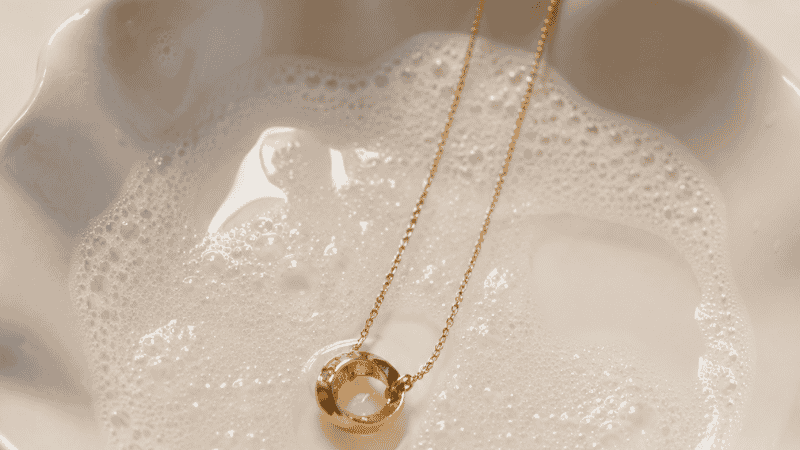
You reach into your jewelry box for that gold necklace — the delicate one you wear with everything — and it looks… wrong. Not broken, not missing, just flat. Lifeless. A little grimy around the chain links. You hold it up to the light and wonder when exactly this happened.
Here’s the thing: it didn’t suddenly get dirty. It got slowly coated. Skin oils, hand lotion, perfume mist, everyday humidity — they build up on gold the way dust settles on a shelf. Quietly, invisibly, until one day you notice the sparkle is gone.
The good news is that cleaning gold jewelry at home is genuinely simple — but only when you know what you’re actually working with and what to avoid. The wrong method can scratch a delicate surface, lift a plated finish, or cloud a gemstone before you realize what’s happening. This guide covers all of it: what to do, what to skip, and how to keep your pieces looking the way they did when you first fell in love with them.
Key Takeaways
- Warm water and a drop of mild dish soap is all you need for most solid gold pieces — no specialty products required
- Gold-plated jewelry needs a gentler approach: no soaking, no brushing, just a soft cloth wipe
- The single most damaging thing for gold jewelry isn’t dirt — it’s chlorine, bleach, and toothpaste
- Cleaning frequency depends on how often you wear a piece: daily-wear jewelry benefits from a gentle clean once a month
- When gemstones are involved, the stone matters as much as the metal — soft stones like pearls and opals should never be soaked
First: What Kind of Gold Do You Actually Have?
Before you reach for anything, take thirty seconds to figure out what you’re working with. This step matters more than most people realize, because the same method that works beautifully on solid 18k gold can ruin a gold-plated piece within a single cleaning.
Solid gold — marked 10k, 14k, or 18k — is the most forgiving. The karat number tells you the gold content: 18k is 75% gold, 14k is about 58%, 10k is 41%. All of them can handle the gentle at-home cleaning method described below. Higher karats are slightly softer and more prone to surface scratches, but they’re durable enough for careful home care.
Gold-filled sits in the middle. It has a genuine, legally regulated layer of gold bonded to a base metal — much thicker than plating. Gold-filled pieces are durable enough for gentle cleaning but still need a lighter touch than solid gold.
Gold-plated is the most delicate. The gold layer is extremely thin — sometimes just a few microns — sitting over a base metal like brass or copper. Aggressive cleaning, prolonged soaking, or even a slightly rough cloth can wear that layer away faster than normal use would.
Not sure which you have? Look for a hallmark stamp: inside a ring band, on the clasp of a necklace, or on the back of an earring post. “750” means 18k solid gold. “585” means 14k. “GP” or “GEP” means gold-plated. “GF” means gold-filled. No stamp at all on an inexpensive piece usually means plated.
What You’ll Need (Probably Already in Your Home)
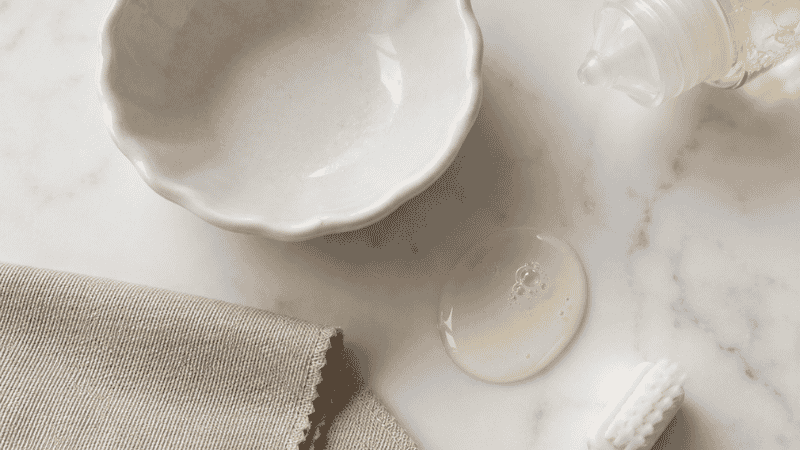
No special purchases required. This is genuinely a household-items situation.
- A small bowl — cereal bowl size is perfect
- Warm water, not hot
- One small drop of mild dish soap — fragrance-free if possible, something gentle like Dawn
- A soft-bristled toothbrush — a baby toothbrush is ideal
- A lint-free cloth or soft microfiber towel
That’s the whole list. You don’t need ultrasonic cleaners, jewelry dipping solutions, or anything sold specifically for this purpose to get genuinely clean gold at home.
How to Clean Gold Jewelry at Home: The Gentle Soak Method
This works for most solid gold and gold-filled pieces — rings, necklaces, earrings, bracelets — with or without hard gemstones like diamonds, sapphires, or rubies.
Step 1: Prepare your cleaning solution. Fill your bowl with warm water — the temperature you’d use to wash your face, not your dishes. Add a single small drop of dish soap and stir gently until the water is lightly sudsy. You really do only need one drop.
Step 2: Let it soak. Place your piece in the bowl and leave it for 15 to 20 minutes. This is where most of the actual cleaning happens — the warm soapy water loosens the layer of body oils, lotion residue, and grime that’s been dulling the surface. Don’t rush this step. The soak is doing the work.
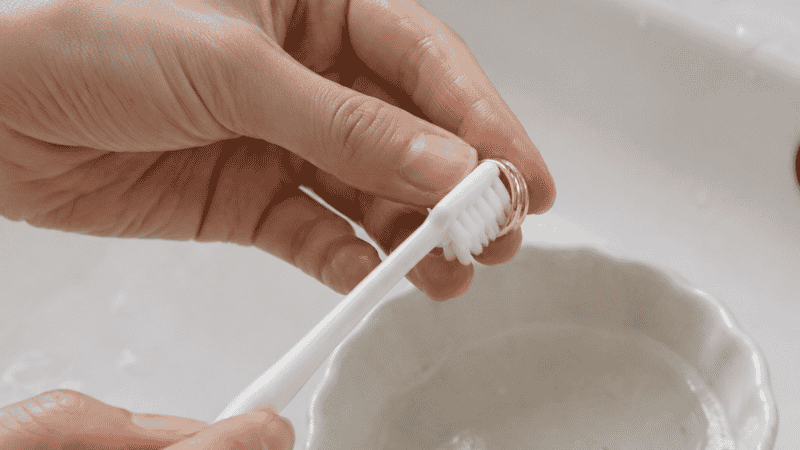
Step 3: Brush gently. Using your soft toothbrush, very lightly work over the surface of the piece. Pay special attention to the undersides of pendants (where buildup collects and never gets light), the inside of chain links, and the area underneath any gemstone settings. Use small circular motions and almost no pressure. You’re coaxing buildup away, not scrubbing it.
Step 4: Rinse carefully. Hold the piece under a slow stream of warm running water until all the soap is gone. If it’s a delicate chain or has a small setting, place it in a fine-mesh strainer rather than holding it over an open drain. This is the moment people lose earring backs and small pendants — worth the extra second of caution.
Step 5: Dry completely. Pat gently with your lint-free cloth, then set the piece on a clean dry towel for at least 10 to 15 minutes before putting it away. Moisture trapped in chain links or underneath stone settings can cause tarnishing and, over time, affect the metal. Full drying is less glamorous than the cleaning itself but just as important.
Cleaning Gold-Plated Jewelry: A Gentler Version
Gold-plated pieces follow the same logic but with two key differences that protect that thin gold layer.
Skip the soak entirely. Instead of submerging the piece in water, dampen a corner of a soft cloth in your soap-and-water mixture and wipe the surface with light pressure. Water sitting against the edge of a plated piece can work its way to the base metal and cause lifting, discoloration, or spotting over time.
Skip the toothbrush too. Even a soft bristle is too much for plated surfaces — it creates micro-scratches that dull the finish in a way that can’t be reversed. A soft cloth is all you need.
The real secret to keeping plated jewelry looking good isn’t deep cleaning — it’s consistent, light maintenance. A quick wipe with a dry soft cloth after each wear takes thirty seconds and makes monthly cleaning almost unnecessary.
What Never to Use on Gold Jewelry
Some of the most commonly suggested DIY cleaning methods are genuinely harmful to gold. These come up constantly in online forums and feel logical in the moment, which is exactly why they’re worth addressing directly.
Toothpaste. It seems intuitive — it cleans things, it’s gentle enough for teeth, why not jewelry? Because toothpaste contains mild abrasives designed to work on tooth enamel. Those same abrasives will scratch gold, particularly higher-karat pieces (which are softer) and anything plated.
Bleach and chlorine. These can permanently alter the metal alloys mixed with gold, weakening the structure and changing the color in ways that can’t be undone. According to Jewelers Mutual, even chlorine at high temperatures — like a hot tub — can cause lasting damage. This applies to cleaning with bleach at home and to wearing gold jewelry while swimming in a chlorinated pool.
Boiling water. It sounds thorough, but extreme heat can loosen the adhesive used in certain stone settings and cause some gemstones — particularly those that have been treated or enhanced — to crack or lose their color.
Paper towels. They feel soft but have a rougher surface than they appear. Use a proper microfiber cloth or a jewelry polishing cloth instead.
Baking soda. Frequently suggested as a “natural” alternative, but baking soda is mildly abrasive. It can scratch gold surfaces, especially higher-karat pieces, and it’s not necessary when mild dish soap works just as well without the risk.
Vinegar. Acidic and potentially damaging to certain gemstones and metal alloys. Not worth the uncertainty when a gentler method is equally effective.
If Your Gold Jewelry Has Gemstones
When stones are part of the picture, the stone’s needs take priority over the metal’s.
Hard, non-porous stones — diamonds, rubies, sapphires, topaz — are generally fine with the gentle soak method above. They can handle warm water and mild soap without issue.
Soft or porous stones need to be treated completely differently. Pearls, opals, emeralds, turquoise, coral, and malachite are all sensitive to water, soap, and temperature changes. Soaking pieces with these stones can cause cloudiness, surface damage, or loosening of the setting. For jewelry with these stones, the safest at-home approach is a barely-damp cloth wipe — no soaking, no brushing — and a professional clean at a jeweler once or twice a year.
If you’re genuinely not sure what kind of stone you have, treat it as soft and fragile until you know otherwise. A little over-caution costs nothing; damage from under-caution can be permanent.
Only Have 10 Minutes? Here’s the Shortcut
Not every cleaning session needs to be a full soak-and-brush situation. For a quick refresh between deeper cleans:
Fill a small cup with warm water, add a tiny amount of dish soap, and dip a corner of a microfiber cloth into the solution. Wipe over the surface of your piece, paying attention to any areas where grime tends to collect. Follow with a wipe from a dry part of the cloth, and leave it on a towel for a few minutes before putting it away.
This takes under five minutes and works beautifully for pieces that get regular wear. It won’t replace a thorough clean, but it extends the time between them and keeps that day-to-day dullness from setting in.
If It Still Looks Dull After Cleaning
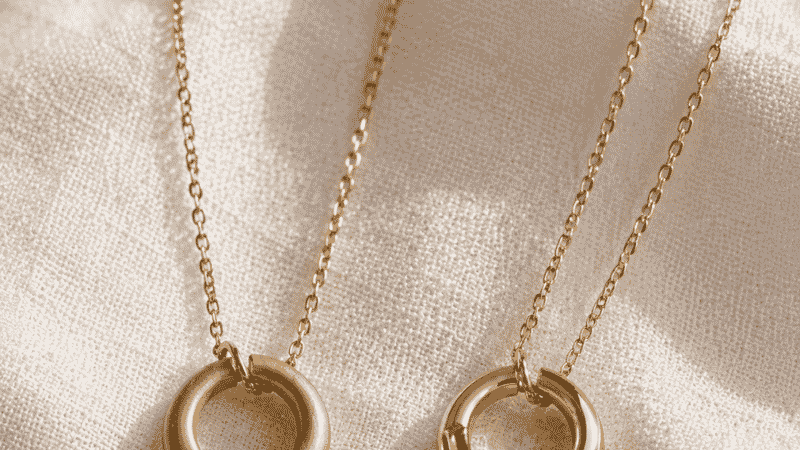
You followed all the steps and the piece still doesn’t look the way it used to. A few things might be happening.
For solid gold, dullness that persists after cleaning is often microscopic surface scratching — tiny marks that accumulate from everyday wear and contact with other jewelry. A jeweler can polish these out with professional equipment in minutes, and it’s much less expensive than most people expect.
For gold-plated pieces, persistent dullness usually means the plating is wearing thin. This is normal — plating doesn’t last forever, and wear rate depends on how often the piece is worn, how it’s stored, and how it’s cleaned. At a certain point, re-plating is the only real solution, which a jeweler can also do.
When a piece has lost its color in patches or shows a different metal color underneath, that’s a clear sign the plating has worn through entirely in those areas. At that stage, cleaning won’t help — it’s time for a conversation with a jeweler.
How Often Should You Clean Gold Jewelry?
For pieces you wear every day — a daily necklace, a ring you never take off — a gentle clean once a month keeps them consistently bright. A quick cloth wipe after each wear is even better and adds almost no time to your routine.
For occasional-wear pieces, clean them before storing after a wearing and again before the next time you put them on. Even sitting still in a jewelry box, pieces are exposed to air and humidity that cause gradual dulling.
The single most effective habit for slowing down the dullness cycle isn’t a cleaning technique — it’s putting jewelry on last. After perfume, after lotion, after hairspray has dried. These products don’t wash off gold; they coat it, and the buildup accumulates faster than anything else in daily life.
Storing Gold Jewelry After Cleaning
A freshly cleaned piece deserves a good home. Store gold in a fabric-lined box or individual soft pouches rather than in a pile where pieces touch each other — contact between pieces creates scratches over time. Keep jewelry away from direct sunlight, high humidity, and heat sources, all of which accelerate tarnishing in plated pieces and can affect certain stones.
For chains especially, hanging them on a small hook or jewelry stand prevents the knotting and tangling that causes chains to wear at the links and break prematurely.
FAQ
Can I use toothpaste to clean gold jewelry? It’s a common suggestion but not a good one. Toothpaste contains mild abrasives designed for tooth enamel, and those same abrasives can scratch gold — especially softer higher-karat pieces and anything plated. Mild dish soap and warm water is safer and equally effective.
How do I know if my jewelry is solid gold or gold-plated? Look for a hallmark stamp — usually on the inside of a ring band, a necklace clasp, or the back of an earring post. “750” means 18k solid gold, “585” means 14k, “GP” or “GEP” means gold-plated, “GF” means gold-filled. No stamp on an inexpensive piece usually means plated.
Why does my gold jewelry turn my skin green? This is a reaction between the base metals in the alloy (not the gold itself) and your skin’s chemistry — sweat, pH levels, and certain skin products can accelerate it. It’s more common with lower-karat gold and gold-plated pieces where the base metal is closer to the surface. Solid 14k or 18k gold rarely causes this. Keeping the piece clean reduces the reaction.
How often should I clean gold jewelry I wear every day? Once a month is a good baseline for daily-wear pieces. A quick wipe with a soft cloth after each wear between deeper cleans makes a noticeable difference and takes under a minute.
Can I use vinegar or baking soda to clean gold jewelry? Both are frequently suggested as natural alternatives, but neither is ideal. Vinegar is acidic and can affect certain gemstones and metal alloys. Baking soda is mildly abrasive and can scratch softer gold surfaces. Mild dish soap and warm water is gentle, effective, and doesn’t carry the same risks.
One Last Thing
There’s something quietly satisfying about taking care of the things that matter to you. A favorite necklace cleaned and put away properly, a ring that catches light the way it’s supposed to — these aren’t big moments, but they add up.
Gold is resilient, but it rewards a light touch. The methods here are gentle by design: simple enough to do regularly, careful enough to protect pieces worth keeping.
Related reading:
- Does Gold Plated Jewelry Tarnish? Here’s the Honest Answer → [internal link]
- 14k vs 18k Gold: What’s the Real Difference? → [internal link]
- How to Store Jewelry So It Actually Stays Nice → [internal link]
Sources:
- Jewelers Mutual Group — How to clean gold jewelry the right way
- NBC News Select — How to clean your jewelry at home, according to experts
- Gwen Beloti, founder of Gwen Beloti Collection (via AOL/Real Simple)
- Wikipedia — Jewellery cleaning