

Maybe you inherited a box of jewelry from a relative and have no idea what any of it is. Maybe you bought something second-hand and the seller said it was gold but you’re not entirely convinced. Maybe someone gave you a piece as a gift and it’s started behaving in ways that don’t feel quite right — a faint green mark where it touches your skin, a slight dulling that doesn’t wipe off.
Whatever the situation, the question is the same: is this actually real gold?
The good news is that you can answer it yourself, at home, without any specialized equipment. Gold has specific physical and chemical properties that make it behave differently from base metals, and those differences are detectable with methods as simple as a magnet or a close look at the clasp. This guide walks through six ways to tell if jewelry is real gold — from the fastest check to the most definitive — along with what to do when the results are inconclusive.
Key Takeaways
- The hallmark stamp is the fastest and most reliable starting point — look for “14k,” “18k,” “585,” or “750” on the clasp, inner band, or back of a pendant
- Real gold is not magnetic — a strong magnet that sticks to a piece is a clear sign it’s not solid gold
- Skin discoloration (green or black marks) is a sign of base metal contact — real gold at 14k and above does not cause this
- No single at-home test is definitive on its own — combine two or three for a more confident answer
- When in doubt, a jeweler can test a piece quickly and inexpensively, often for free
Start Here: Read the Hallmark Stamp
This is the fastest check and the one to always do first when learning how to tell if jewelry is real gold.
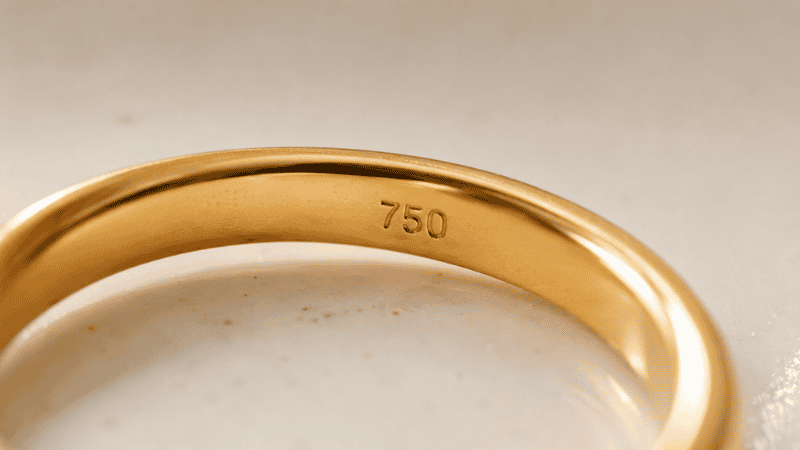
Real gold jewelry is stamped with a hallmark — a small marking that indicates its gold content. You usually need a magnifying glass or reading glasses to see it clearly, and you often need to know where to look: the inside of a ring band, the clasp of a necklace or bracelet, or the back of a pendant or earring.
What to look for:
Karat stamps — “10k,” “14k,” “18k,” or “24k” — directly state the gold content. 14k means 58.3% pure gold, 18k means 75%, and so on.
Numeric purity stamps — three-digit numbers that correspond to the same information. “585” means 14k (58.5% gold), “750” means 18k (75% gold), “417” means 10k. These are common on European pieces and on pieces made by international brands.
What to watch for:
Stamps that say “GF” (gold filled), “GP” (gold plated), “GEP” (gold electroplate), or “HGE” (heavy gold electroplate) indicate the piece is not solid gold — it has a gold coating over a base metal. Still real gold on the surface, but not solid gold throughout.
“925” is not a gold stamp — it’s sterling silver. A piece stamped 925 is silver, not gold.
No stamp at all is common on very old pieces (hallmarking wasn’t consistently required in the United States until the mid-20th century) and on inexpensive fashion jewelry. Absence of a stamp doesn’t definitively mean not gold, but it’s a flag worth noting.
One important caveat: stamps can be faked. Unscrupulous sellers occasionally stamp base metal pieces with gold markings. The stamp is always worth checking first, but it shouldn’t be your only test if you have genuine reason to doubt the piece.
The Magnet Test: Fast and Revealing
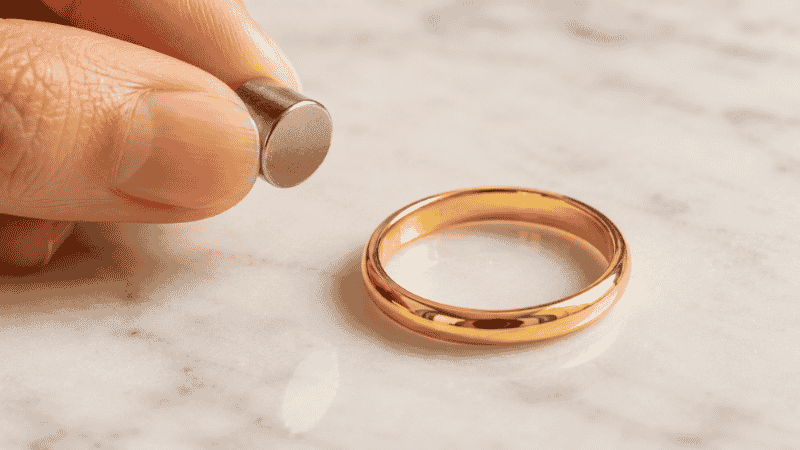
Pure gold is not magnetic. This property is reliable and testable at home in about thirty seconds.
Hold a strong magnet close to the piece. A refrigerator magnet is usually too weak — use a rare earth (neodymium) magnet, which are inexpensive and widely available online. If the piece is attracted to the magnet — pulled toward it or sticking to it — it contains magnetic metals, which gold is not. Iron, nickel, steel, and cobalt are all magnetic and are common in base metal jewelry.
What a positive result means: The piece is either not gold, or it’s gold plated over a magnetic base metal. The magnet is sticking to the base, not the gold surface.
What a negative result means: The piece passed this test, but isn’t necessarily confirmed real gold. Some metals used in fake jewelry — brass, copper, aluminum — are also non-magnetic. A piece that doesn’t attract a magnet could still be fake gold.
The bottom line: The magnet test is excellent at ruling pieces out — if it sticks, it’s not solid gold. It’s less useful at confirming a piece is real, because non-magnetic fake metals exist.
One note: gold filled pieces made in Italy may respond slightly to a magnet because cobalt is added to the brass alloy during manufacturing. This is a known exception, not a sign the piece is fake.
The Skin Test: Wear It and Wait
This one takes a few days but requires zero effort and zero tools.
Put the piece on and wear it normally for two to three days. Pay attention to anywhere the metal touches your skin — the inside of a ring band, the back of a pendant, your wrist under a bracelet.
Green marks mean copper is reacting with your skin’s chemistry. Copper is a component of many base metals and gold alloys. Pure gold doesn’t cause green staining — but lower-karat gold does contain copper, and in some cases, 10k gold can cause very slight staining on people with acidic skin chemistry. Green marks from a piece described as 14k or higher are a red flag worth investigating further.
Black marks are sometimes caused by the metal reacting with sulfur compounds in cosmetics, lotions, and skin products — this can happen with real gold and doesn’t necessarily indicate fake metal. But consistent black staining on skin that isn’t caused by cosmetics points toward base metal exposure.
No marks at all is what you’d expect from 14k gold and above under normal conditions.
The skin test is useful context but not definitive — it’s easily affected by individual skin chemistry, cosmetic use, and the specific alloy composition of the piece.
The Visual Inspection: Look for Wear Patterns
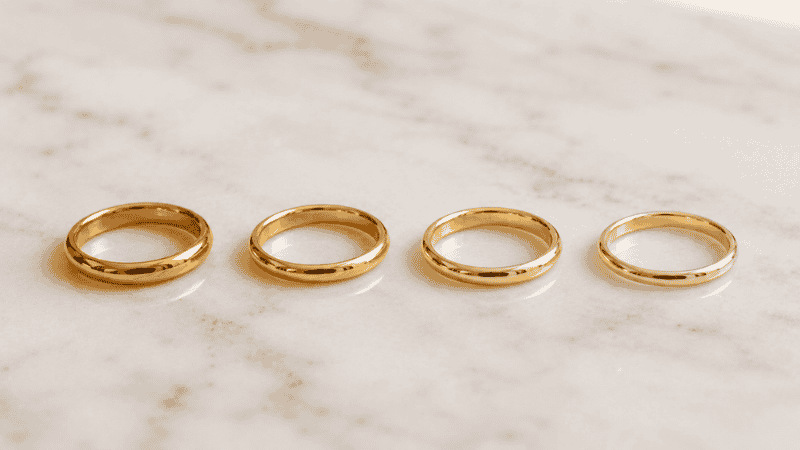
Real gold is consistent throughout. Gold plating sits only on the surface — and when it wears away, what’s underneath shows through.
Look carefully at the edges and highest-contact points of the piece: the edges of a ring band, the clasp of a necklace, the inside curve of a bracelet, anywhere the piece regularly rubs against skin or clothing. Use a magnifying glass if you have one.
Signs of plating wearing through: A different color showing at wear points — often a yellower, greener, or darker tone beneath the gold surface. This is the base metal becoming visible as the plating wears away.
Areas that look shinier or more “perfect” than others — this can indicate re-plating over a base metal piece, where some areas were plated more thickly than others.
A slightly different texture at edges or corners — plating tends to be thinner at sharp edges, which is why those areas often show wear first.
What to look for in genuine solid gold: The color should be completely consistent everywhere, including at edges and wear points. Solid gold doesn’t have a different layer underneath — the same metal runs all the way through, so wear doesn’t reveal a different color.
The Float Test: Dense Metals Sink
Gold is one of the densest metals that exists. A cubic centimeter of 18k gold weighs about 15 grams. Most fake metals — brass, copper, aluminum — are significantly lighter.
Fill a glass with water and gently drop the piece in.
Real gold sinks quickly and decisively to the bottom. It doesn’t float, and it doesn’t hover in the middle of the glass.
A piece that floats or sinks slowly may be made of a lighter metal.
Important caveats: This test works best for pieces with some mass — a substantial ring or bracelet. Very small, lightweight pieces (thin chains, tiny earrings) may behave unpredictably because surface tension can affect how light objects behave in water. Also, many fake metals are still denser than water and will sink — the float test catches very obvious fakes but isn’t reliable for distinguishing solid gold from denser base metals like brass.
Dry the piece completely afterward if it has any plating or sensitive components.
The Vinegar Test: A Chemical Check
White vinegar is a mild acid. Real gold doesn’t react to it. Many base metals do.
Apply a few drops of white vinegar directly to the piece, or briefly dip a small area. Wait one to two minutes, then rinse and dry.
If the metal changes color — darkens, tarnishes, or shows any visible reaction — it’s not real gold.
If the metal maintains its color and shine — it passed this test.
This test is generally safe for solid gold pieces. For plated or vermeil pieces, the acid can affect the plating layer, so use it cautiously and only on a small, inconspicuous area if you’re testing a piece you still want to wear.
When to See a Jeweler
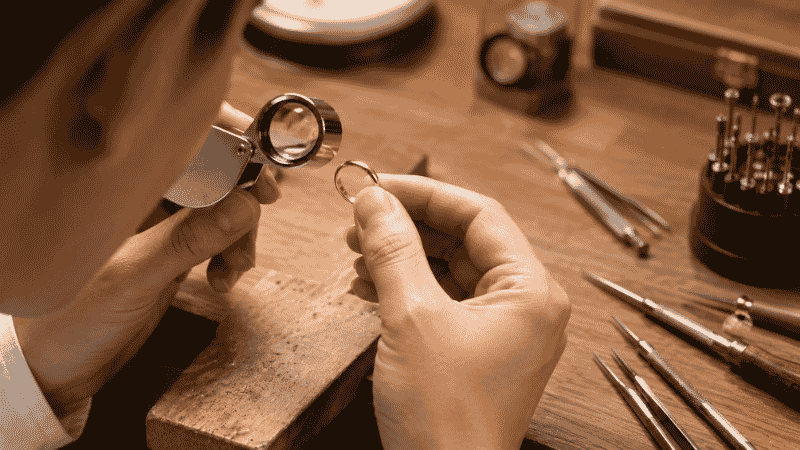
If you’ve run two or three of these tests and still aren’t certain, or if the piece has significant value and you need a definitive answer, the right next step is a jeweler.
A professional jeweler can perform an acid test — applying specific concentrations of nitric acid to a small scratch on the piece, which reacts differently depending on the gold content and allows precise karat identification. They can also use electronic gold testers that give an immediate, precise purity readout without damaging the piece.
Most jewelers will perform a quick gold test for free or for a small fee. For inherited pieces, estate jewelry, or anything you’re considering selling, a professional assessment is worth the fifteen minutes it takes.
Reading the Stamps: A Quick Reference
| Stamp | What It Means |
|---|---|
| 999 or 24k | 99.9% pure gold |
| 750 or 18k | 75% gold (18 karat) |
| 585 or 14k | 58.5% gold (14 karat) |
| 417 or 10k | 41.7% gold (10 karat) |
| GF or 1/20 | Gold filled |
| GP or GEP | Gold plated |
| 925 | Sterling silver (not gold) |
| No stamp | Unknown — requires further testing |
FAQ
Does real gold turn your skin green? Solid 14k gold and above rarely causes skin discoloration. Lower-karat gold (10k) contains more copper and can cause slight green staining in people with very acidic skin chemistry. Consistent green marks from a piece described as 14k or higher are a sign worth investigating.
Can fake gold have a real-looking stamp? Yes — stamps can be faked. A piece stamped “14k” is not automatically solid gold. The stamp is always worth checking first, but combine it with the magnet test and a visual inspection before drawing conclusions, especially for pieces purchased secondhand or inherited without documentation.
Is the magnet test reliable for telling if jewelry is real gold? It’s reliable for ruling out pieces — if a strong magnet sticks, the piece contains magnetic metals and is not solid gold. It’s less reliable for confirming gold, because some non-magnetic fake metals (brass, copper, aluminum) also won’t attract a magnet.
What does “750” mean on jewelry? 750 is the European hallmark for 18k gold, indicating 75% pure gold content. It’s the same as an “18k” stamp — just expressed as parts per thousand rather than karats.
How can I tell if a necklace is real gold without taking it to a jeweler? Start with the hallmark stamp — look at the clasp with a magnifying glass. Then try the magnet test. If both are inconclusive, wear it for a few days and check for skin discoloration. Running two or three tests together gives you a much more confident answer than any single test alone.
There’s something both practical and quietly satisfying about knowing what you’re actually wearing. Whether it’s a piece you inherited, something you bought secondhand, or a gift you’ve never been quite sure about, these tests give you real information rather than uncertainty.
Gold is worth knowing. And now you know how to find out.
Related reading:
- What Is Gold Vermeil? The Honest Guide → [internal link]
- What Is Gold Filled Jewelry? The Complete Guide → [internal link]
- 14k vs 18k Gold: What’s the Real Difference? → [internal link]
Sources:
- The Carat Cut — How to Tell if Gold is Real: 5 At-Home Tests (March 2026)
- 1stDibs Expert Q&A — How can you tell if gold jewelry is real? (August 2024)
- Jewels and Chains — How to Tell if Gold is Real: Test Jewelry in 5 Minutes (March 2026)
- Ice Carats — 6 Easy Ways to Spot Real Gold vs. Fake Gold Jewelry (April 2026)