
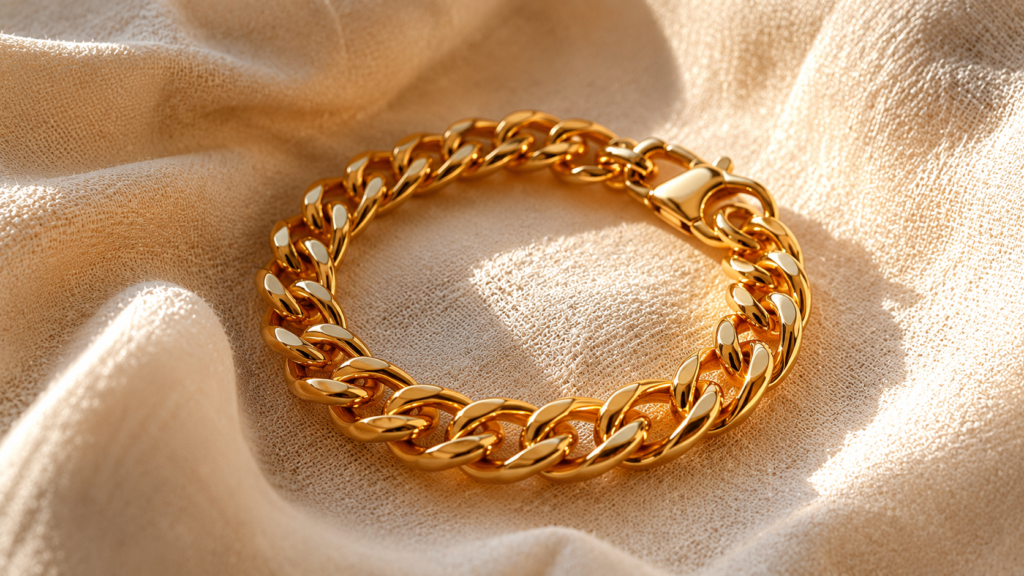
If you’ve been shopping for jewelry with any seriousness — building a capsule collection, looking for something that will actually last, trying to understand why some pieces tarnish in weeks while others seem to go forever — you’ve probably encountered the term “gold filled” and wondered exactly where it sits in the hierarchy.
It’s not solid gold. It’s clearly different from gold plated. But beyond that, the explanations you find tend to be either overly technical (written for people who make jewelry, not people who wear it) or frustratingly vague (“a thick layer of gold bonded to a base metal” — yes, but what does that mean for you in practice?).
This guide answers the questions that actually matter when you’re deciding whether to buy something: what gold filled jewelry is, how it’s made, how it compares to gold plated and gold vermeil, how long it lasts, whether it’s safe for sensitive skin, and when it makes sense over solid gold. No jargon, no filler.
Key Takeaways
- Gold filled jewelry is legally required to contain at least 5% gold by weight — that’s roughly 100 times more gold than standard gold plating
- The gold is mechanically bonded to a brass core through heat and pressure, not electroplated — which is why it’s dramatically more durable
- With normal wear, gold filled pieces last decades rather than months — the gold layer is thick enough that it won’t wear through in your lifetime for most pieces
- It’s hypoallergenic in practice for most people, because the thick gold layer prevents the brass core from making contact with skin
- Gold filled is the most durable non-solid-gold option available — more so than gold vermeil, and significantly more than standard gold plating
What Is Gold Filled Jewelry, Actually?
Gold filled is a layered material, not an alloy. That distinction matters more than it might seem.
When you make an alloy — like 14k solid gold — you melt metals together to create a new material throughout. Every molecule of a 14k gold ring is the same mixture of gold and other metals all the way through. Gold filled doesn’t work that way.
Instead, gold filled is constructed in layers: a core of jeweler’s brass, with a thick layer of gold alloy bonded to its surface through heat and pressure. The result is a material with a brass interior and a genuine gold exterior — like a sandwich, with gold on the outside and brass in the middle. The two are not mixed; they’re bonded.
This layered construction is what distinguishes gold filled from gold plating (which applies a thin surface coating through an electrical process) and what gives it its durability. The gold layer in gold filled isn’t deposited on top — it’s mechanically fused to the brass, which means it doesn’t separate or peel the way plating can.
The legal standard: In the United States, the Federal Trade Commission regulates the use of the term “gold filled.” To qualify, the gold content must make up at least 5% of the piece’s total weight, and the gold used must be at least 10 karat. Most gold filled jewelry uses 14k or 12k gold. You’ll often see it labeled “14/20 GF” — meaning 14k gold that comprises 1/20th (5%) of the total weight.
That 5% might sound small, but in context it’s significant. Standard gold plating contains an estimated 0.05% gold by weight or less. Gold filled has roughly 100 times more gold than typical gold plating.
How Gold Filled Jewelry Is Made
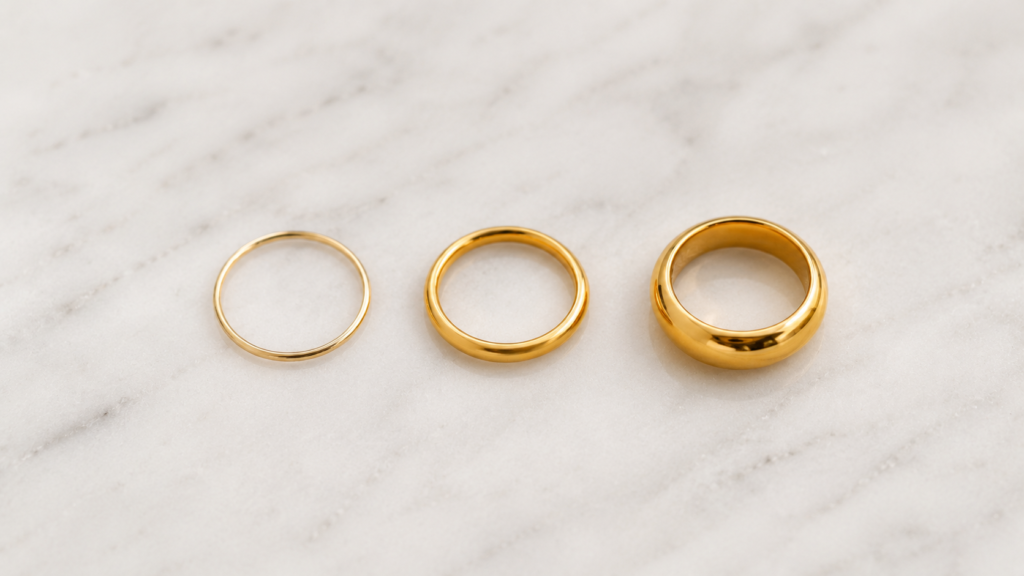
The manufacturing process is what sets gold filled apart, and understanding it helps explain why it behaves so differently from plated jewelry.
A sheet of brass is sandwiched between layers of gold alloy. The whole assembly is then heated and passed through rollers multiple times — a process that both bonds the metals together and thins the sheet to the desired gauge. The result is a material where the gold is not sitting on top of the brass but is genuinely fused to it at a molecular level.
This bonded sheet is then used to make jewelry components: chains, wire, findings, earring backs, and so on. Because the layers remain distinct throughout the process, gold filled can’t be cast (casting melts everything together, which would destroy the layered structure). This is why you’ll rarely find gold filled pieces with very complex three-dimensional forms — the material works best for wire, chain, and stamped or formed shapes.
Gold plating, by contrast, involves an electrical process where gold ions are deposited onto a base metal surface from a solution. The layer is extremely thin — often 0.5 microns or less — and sits on rather than fusing with the base metal. Over time, this surface layer wears away through friction, moisture, and chemical exposure, exposing the base metal beneath.
The practical difference: gold filled jewelry’s gold layer is thick enough that it won’t wear through under normal conditions in a human lifetime for most pieces. Gold plating’s layer often wears through within months to a couple of years of regular wear.
Gold Filled vs Gold Plated: What’s the Real Difference?
This is the comparison most people need, and the difference is more significant than most product descriptions convey.
Gold plated applies a thin layer of gold — legally, as little as 0.5 microns — to a base metal (usually brass, copper, or stainless steel) through electroplating. There’s no minimum gold content requirement by weight. The base metal can be anything. When the plating wears through (and it will, with daily wear, usually within months to a couple of years), the base metal makes contact with your skin — which is when green marks and potential irritation appear.
Gold filled bonds a thick layer of gold — at least 5% of total weight — to brass through heat and pressure. The layer is dramatically thicker than plating. Because it’s fused rather than deposited, it doesn’t peel or separate the way plating does. And because the gold is always on the surface, the brass core rarely makes contact with skin during normal wear.
The durability difference is real and substantial. A gold plated necklace worn daily might start showing wear within six months to a year. A gold filled necklace worn daily, cared for reasonably, can look identical to how it looked twenty years ago. Jewelers who work with gold filled regularly describe it as a “lifetime product for normal jewelry wear” — a phrase you’d never apply to standard gold plating.
Gold Filled vs Gold Vermeil: Which Is Better?

This comparison is closer, because gold vermeil is also a higher-quality option than standard gold plating. But there are meaningful differences.
Gold vermeil (pronounced “ver-MAY”) requires a sterling silver base and at least 2.5 microns of gold — significantly thicker than standard plating, but still a fraction of what gold filled contains. Because the base is sterling silver rather than brass, vermeil is considered more hypoallergenic and has a slightly more refined feel. The sterling silver base also takes gold plating more evenly, giving vermeil a slightly more consistent, lustrous finish.
Gold filled wins on pure durability. The gold layer is thicker than vermeil’s minimum, the bonding process is more permanent than electroplating, and the overall lifespan with daily wear is longer. The trade-off is that the brass base in gold filled is slightly less hypoallergenic than sterling silver — though in practice, because the gold layer is so thick, the brass rarely causes reactions for people who aren’t severely sensitive.
Honest comparison for daily wear:
- Gold plating: months of daily wear
- Gold vermeil: 1 to 3+ years of daily wear
- Gold filled: decades of daily wear
- Solid gold: indefinitely
For a necklace or bracelet you plan to wear every single day for years, gold filled is the most practical non-solid-gold choice. For occasional-wear pieces, vermeil’s slightly more refined base material may matter more.
Is Gold Filled Jewelry Real Gold?
Yes and no — and this distinction matters legally, not just semantically.
The gold in gold filled is real gold. It’s not gold-colored coating or gold-toned metal. The surface layer is genuine gold alloy — 14k or 12k, depending on the piece. If you were to test just the surface of a gold filled piece, it would read as real gold.
But gold filled is not solid gold, and it’s illegal in the United States to call it gold or abbreviate it to just “14k” without the full “gold filled” qualifier. The Federal Trade Commission is explicit about this: calling a gold filled piece simply “gold” is considered fraudulent misrepresentation, because it implies the piece is solid gold throughout.
The correct terminology is “14k gold filled” or “12k gold filled” — always the full phrase. If you see a piece described only as “14k” without “gold filled” and it’s priced like an accessible everyday item rather than fine jewelry, look more carefully at the description.
Does Gold Filled Jewelry Tarnish?
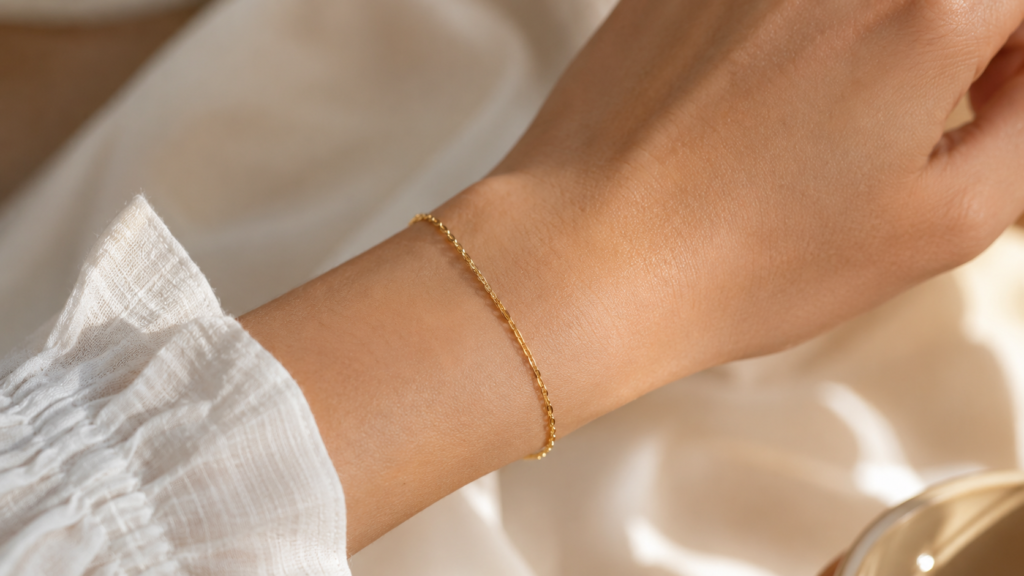
Under normal circumstances: rarely, and not in the way you might expect.
Because the gold surface layer is thick and genuinely fused to the brass, the brass core almost never gets exposed to the air or to skin during normal wear. And gold itself doesn’t tarnish — it’s chemically stable under ordinary conditions. This is why gold filled pieces can look identical after years of wear to how they looked when new.
The exception: extreme chemical exposure. Halstead, one of the most respected gold filled suppliers in the United States, notes that blackening has occurred with gold filled in nail salons with very high sulfide fume concentrations, during overseas transit through heavily polluted shipping ports, and in buildings that experienced fires. These are genuinely unusual circumstances.
For ordinary life — wearing to work, taking off before the shower, sleeping in it occasionally, swimming once in a while — gold filled holds up remarkably well. Light cleaning with a soft cloth or mild soapy water is all most gold filled pieces will ever need.
Is Gold Filled Jewelry Safe for Sensitive Skin?
For most people with metal sensitivities, gold filled is a safe choice — with one important caveat.
The brass core in gold filled contains copper and zinc, and sometimes traces of other metals. In theory, someone severely sensitive to these metals could react if the gold layer wore through. In practice, because the layer is so thick, this rarely happens with normal wear.
People who react to nickel specifically should be aware that some gold filled jewelry may contain nickel in the brass alloy. If nickel sensitivity is a concern, check the manufacturer’s specifications for their specific alloy composition.
For the vast majority of people who experience reactions to costume jewelry or gold plated pieces — reactions that are usually caused by the brass or copper base making skin contact — gold filled works well precisely because the thick gold layer keeps the base metal away from your skin.
When Gold Filled Makes Sense Over Solid Gold
Gold filled is not a compromise version of solid gold — it’s a different material with different strengths. Understanding when it makes sense helps you spend money where it actually matters.
Gold filled makes sense for:
Everyday pieces you’ll wear constantly — a simple chain necklace, a pair of hoops, a bracelet you never take off. The durability of gold filled means these pieces hold up to the friction and sweat of daily life far better than plated alternatives, and the cost is a fraction of solid gold for simple designs.
Pieces where the design matters more than the material’s resale value. Gold filled has minimal resale value compared to solid gold, but if you’re buying a necklace to wear and enjoy rather than as an investment, that doesn’t matter.
Building a jewelry wardrobe incrementally. Gold filled lets you own quality pieces across multiple categories — earrings, necklace, bracelet, ring — at a price that makes the whole collection accessible, rather than spending your entire jewelry budget on one solid gold piece.
Solid gold makes more sense for:
Pieces with significant gemstone settings where the metal plays a structural role. Rings that are worn 24/7 and never removed. Anything with sentimental value you want to last generations without any uncertainty. Fine jewelry that you’d want to resize, repair, or have appraised.
How to Care for Gold Filled Jewelry
Gold filled is forgiving, but a few habits extend its life meaningfully.
Wipe it with a soft cloth after wearing — skin oils and moisture don’t damage it, but removing them prevents buildup. Store it separately from harder metals that could scratch the surface. Remove it before swimming in heavily chlorinated water or hot springs — occasional pool exposure is fine, but repeated intense chemical exposure can affect any metal over time. Avoid harsh jewelry cleaners designed for silver or with strong chemicals; mild soap and warm water is all you need.
What you don’t need to worry about: the occasional shower, light rain, hand washing, moderate sweat. Gold filled handles these things well. The pieces that look dull after years of gold filled wear are usually ones that haven’t been cleaned, not ones that have worn through.
FAQ
Is gold filled jewelry real gold? The surface layer is real gold — 14k or 12k — genuinely fused to the piece. Gold filled is not solid gold, and legally cannot be called simply “gold.” But the gold you see and touch is real, not gold-colored coating.
Does gold filled jewelry tarnish? Under normal wear conditions, gold filled rarely tarnishes because the thick gold surface layer stays intact and gold itself doesn’t oxidize. Extreme chemical exposure (nail salon fumes, heavy industrial environments) can cause blackening, but this is unusual. With everyday wear and basic care, gold filled pieces typically need nothing more than an occasional wipe.
How long does gold filled jewelry last? With normal daily wear and reasonable care, gold filled jewelry can last decades. Industry professionals describe it as a lifetime product for standard jewelry use — a timeframe you’d never apply to gold plated pieces. The gold layer is thick enough that it won’t wear through under ordinary circumstances.
Is gold filled better than gold vermeil? Both are significantly better than standard gold plating. Gold filled is more durable for everyday wear because the gold layer is thicker and more permanently bonded. Gold vermeil has a more refined sterling silver base that’s hypoallergenic for virtually everyone. For pieces worn daily, gold filled wins on longevity. For occasional wear or gifting, vermeil’s sterling base is a nice quality signal.
Can I shower or swim with gold filled jewelry? Occasional water exposure — including showers and light swimming — is generally fine for gold filled. Repeated exposure to heavily chlorinated pools, hot springs, or water with high mineral concentrations can affect the surface over time. The bigger concern is leaving pieces wet without drying; moisture trapped in settings or clasps can cause issues with any metal.
Gold filled sits in a category of its own — more accessible than solid gold, more durable than almost anything else at a comparable price point. Once you understand what it is and how it’s made, the choice of when to reach for it becomes much clearer.
It’s not a budget option. It’s a different option. And for the kind of everyday jewelry that becomes part of how you move through the world, it’s often exactly the right one.
Related reading:
- What Is Gold Vermeil? The Honest Guide to Jewelry’s Most Misunderstood Term → [internal link]
- Does Gold Plated Jewelry Tarnish? Here’s the Honest Answer → [internal link]
- How to Clean Gold Jewelry at Home (Without Damaging It) → [internal link]
Sources:
- Halstead Bead — What Is Gold-Filled? Can it Tarnish? FAQ’s for Gold-Filled Jewelry (August 2013, updated)
- Borsheims — Gold-Plated vs Gold Vermeil vs Gold-Filled Jewelry: What’s the Difference? (May 2025)
- Bits & Bangles — Gold-Filled vs. Gold-Plated vs. Vermeil: The Only Comparison You Need (December 2025)
- Federal Trade Commission — Guides for the Jewelry, Precious Metals, and Pewter Industries (regulatory standard for gold filled definition)