
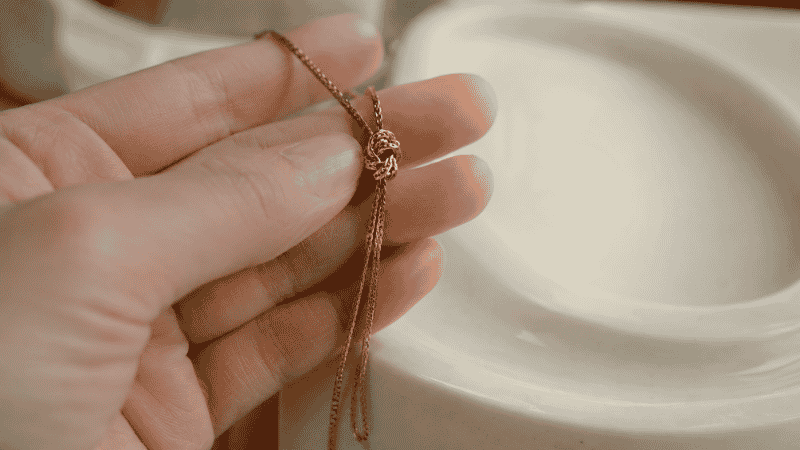
You’re already running late. You reach into the jewelry box for the necklace — the delicate gold one, or the layered chains you put away in a hurry last week — and it comes out as a single dense knot. Not a loose tangle. A proper, compressed, where-does-one-chain-end-and-the-other-begin knot.
The instinct is to pull. Please don’t pull.
Pulling is how a five-minute fix becomes a broken clasp or a kinked chain that no longer hangs straight. Necklace knots — even the ones that look catastrophic — are almost always solvable at home, with patience and the right approach. The key is understanding what kind of tangle you’re dealing with and choosing the method that matches it, rather than throwing everything at it in frustration.
This guide covers five reliable methods for how to untangle a necklace, from the simplest fix that works in under a minute to the techniques that handle genuinely stubborn knots. Plus what to do when nothing works, and how to make sure this doesn’t happen again.
Key Takeaways
- Never pull a tangled necklace — tension tightens knots and risks breaking the chain at its weakest point
- Lay the necklace flat on a hard surface before doing anything else — this alone loosens many mild tangles
- A single straight pin is the most universally effective tool for working through a knot
- Adding a small amount of lubricant (baby powder, baby oil, or olive oil) reduces friction and makes even tight knots significantly easier to open
- Most necklace knots can be resolved in 5 to 15 minutes — the ones that can’t should go to a jeweler, not a drawer
Why Necklaces Get Tangled in the First Place
Understanding the cause is more useful than it sounds, because it points directly to prevention.
The main culprit is almost always storage. A necklace tossed into a jewelry box without being fastened — or stored alongside other chains — has nothing to stop its links from catching on each other every time the box is opened or moved. Over time, small snags become loops, loops become knots, and knots become the dense ball you’re looking at right now.
The second cause is wearing without fastening. Layered necklaces that aren’t properly separated move against each other throughout the day, and the clasp end of an unfastened chain is particularly good at threading itself through other links.
Fine chains are the most vulnerable — their links are small enough to pass through each other easily, which is why a delicate gold chain can knot itself in a bag in a way a heavier chain simply wouldn’t. This also means fine chains need the most gentle approach when untangling.
Before You Start: Two Things That Help Immediately
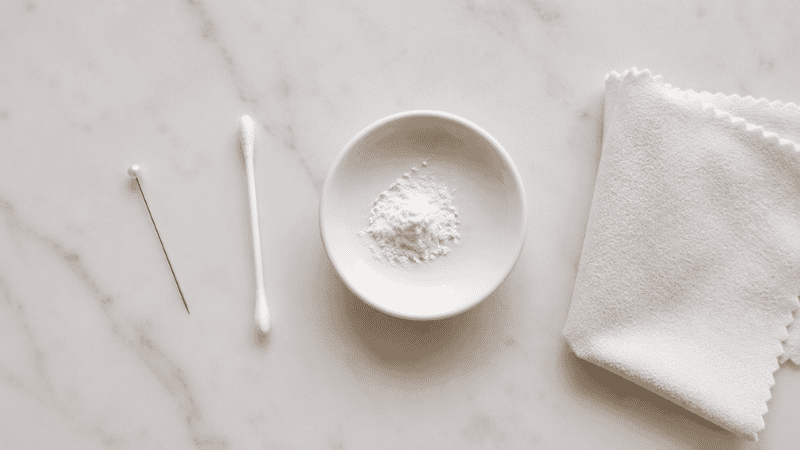
Unclasp the necklace. If you haven’t already, open the clasp. A closed clasp creates a fixed point that the chain keeps catching on as you work. An open chain moves more freely and is significantly easier to manipulate.
Lay it flat on a hard, light-colored surface. A table, a ceramic plate, a piece of white paper. Not a towel or soft fabric — the texture adds friction and the chain can catch on fibers. A smooth hard surface lets gravity help you, and a light color makes it easier to see what you’re doing with fine chains.
These two steps alone resolve surprisingly mild tangles. If the knot loosens just from being spread flat and left alone for a moment, you might not need anything else.
Method 1: The Straight Pin — For Most Everyday Knots
This is the method that works for the majority of necklace knots, and it’s what most jewelers would recommend starting with.
You need one straight pin, sewing needle, or safety pin. That’s it.
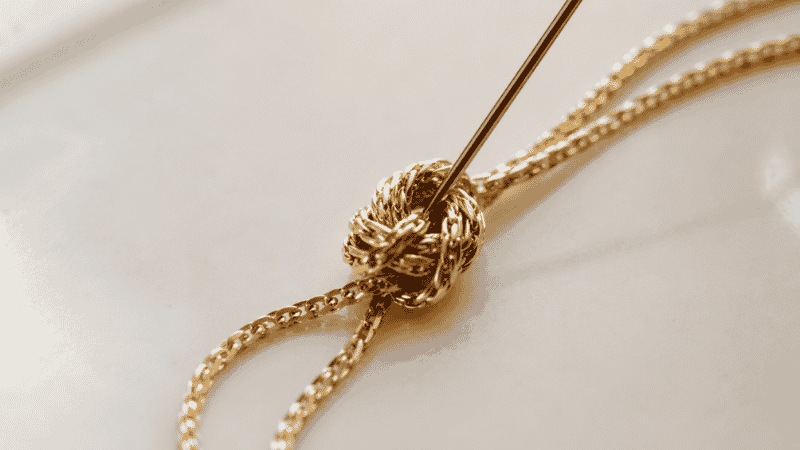
Place the necklace flat on your hard surface. Find the center of the knot — the densest point where the links are most compressed. Insert the tip of the pin into that center point. Don’t push hard or try to force anything open. The goal is to create a small amount of space inside the knot, not to lever it open aggressively.
Once the pin is in the center, rotate it very gently — almost like stirring something very slowly. This creates slack inside the knot. As you feel the links begin to loosen, use the pin tip to coax one loop outward at a time. Work from the inside of the knot outward, not from the outside in.
If the knot is complex, you can use two pins — one to hold a loop open while the other works the next section loose. This two-pin technique is particularly effective for the kind of dense multi-chain knots that happen when several necklaces are stored together.
The most important instruction for this method: slow down when you feel resistance. If the pin feels like it’s catching, don’t push. Reposition and try again. Rushing is how fine chain links get pulled out of alignment.
Method 2: Baby Powder — For Knots That Won’t Budge
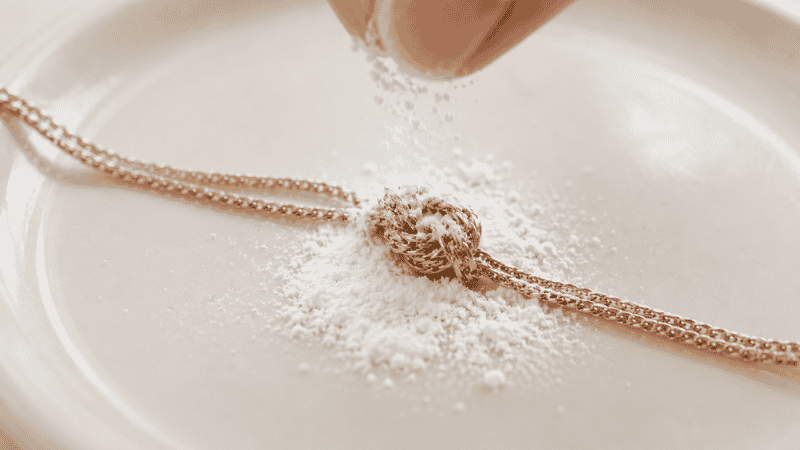
If the pin method isn’t making progress, add lubrication. Baby powder is the cleanest option and the one most Reddit and forum users consistently recommend for stubborn knots.
Sprinkle a small amount of baby powder directly over the knot — not the whole chain, just the knotted area. Use your fingertip to gently work the powder into the links. You’ll feel the chain becoming slightly more slippery almost immediately.
Now go back to the pin method. The powder reduces friction between the links, which means they slide past each other instead of catching. Knots that felt completely immovable a minute ago will often start to loosen within thirty seconds of adding powder.
After the knot is resolved, wipe the chain clean with a soft dry cloth to remove the powder before wearing or storing.
This method works beautifully for fine gold and silver chains. It’s dry, it doesn’t damage metal, and it washes off completely.
Method 3: Baby Oil or Olive Oil — For Very Tight Knots
For knots that are genuinely compressed — the kind where the links look almost fused together — a liquid lubricant gives you more penetration than powder.
Apply a single drop of baby oil, mineral oil, or olive oil directly to the knot using a cotton swab or your fingertip. Let it sit for one to two minutes. The oil works its way between the links and begins to loosen the friction that’s holding the knot together.
Then use two pins to work through the knot as described above. The difference with oil is significant — links that were locked in place will slide past each other much more readily.
Important notes for this method: use the absolute minimum amount of oil needed. More doesn’t help faster and creates more cleanup. After untangling, clean the chain with a small amount of mild dish soap and warm water, rinse thoroughly, and dry completely before storing. Oil left on a chain — especially a plated or vermeil chain — can affect the finish over time.
For gold vermeil or gold-plated pieces, use this method with extra care and clean promptly afterward.
Method 4: Warm Water Soak — For Knots Tightened by Grime
Sometimes what makes a knot impossible to open isn’t just the tangle itself — it’s dirt, skin oil, or product buildup that has dried between the links and essentially glued them together.
If you’ve tried the pin method and the chain feels stiff or sticky rather than just tangled, fill a small bowl with warm (not hot) water and add one drop of mild dish soap. Submerge the knotted section and let it soak for five to ten minutes.
The soapy water loosens the buildup between links, restoring their natural movement. After soaking, lay the chain flat on a clean surface and try the pin method again. You’ll often find the chain moves completely differently — links that were stuck will now slide freely.
Rinse thoroughly after untangling, pat dry, and leave on a clean towel for fifteen minutes before putting away. This method is safe for solid gold and sterling silver. For plated or vermeil pieces, keep the soak brief and dry thoroughly.
Method 5: Two Toothpicks — When You Don’t Have Pins
If you’re away from home or don’t have pins available, two toothpicks work as a reasonable substitute. The tips aren’t as fine as a pin, which makes them less precise for very small knots, but for medium-sized tangles they’re entirely effective.
The technique is the same as the two-pin method: one toothpick to hold a loop open, the other to work the next section loose. Work slowly, from the inside of the knot outward.
If Nothing Is Working: When to Stop and See a Jeweler
There’s a point where continuing to work on a knot at home becomes more likely to cause damage than to solve the problem. That point is:
When the chain has started to kink — developing sharp bends that don’t lie flat. Kinking means the metal has been stressed beyond its natural flexibility, and further manipulation can cause it to break at that point.
When you can see that links have opened or deformed. A link that’s come apart needs to be closed by someone with the right tools — not pulled or twisted back into shape at home.
When the knot involves a very fine chain (under 1mm) and has been compressed for a long time. These chains are delicate enough that professional untangling under magnification is genuinely safer than continued home attempts.
A good jeweler can untangle even severe knots under magnification with professional tools, usually quickly and inexpensively. It’s far better to spend a small amount on a professional fix than to break a chain you genuinely care about.
How to Keep Necklaces from Tangling Again
The fix is satisfying. The prevention is even better.
Fasten the clasp before storing. Always. An open clasp is the single biggest contributor to necklace knots — the end threads through other links constantly. One second of fastening before putting a necklace away prevents most tangles entirely.
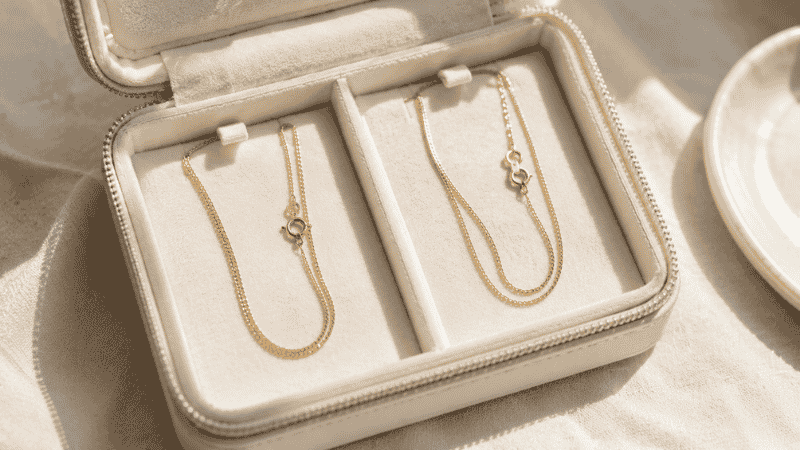
Store each necklace separately. Individual soft pouches, compartments in a lined jewelry box, or small zip-lock bags all work. Any solution that keeps chains from touching each other prevents the catching that leads to knots.
Hang necklaces when possible. A small jewelry stand or wall-mounted hooks keep chains straight and separate. This is particularly useful for everyday pieces you wear regularly — they’re accessible and tangle-free.
Use a straw for travel. Thread a necklace through a drinking straw before putting it in a bag. The straw keeps the chain straight and prevents it from looping or catching on anything during transit. It sounds small, but it genuinely works.
Don’t pile chains in a drawer. Even brief storage in a pile leads to tangles. A shallow tray with dividers, or even a piece of foam with small pins, keeps chains organized and separate without taking up much space.
FAQ
What is the fastest way to untangle a necklace? The flat surface plus straight pin method is the fastest for most everyday knots — often under five minutes. Adding baby powder to the knotted area before using the pin speeds up the process significantly by reducing friction between the links.
Can I untangle a very fine gold chain without breaking it? Yes, but fine chains require more patience and lighter pressure than heavier chains. Use a single fine pin rather than two, work more slowly, and add baby powder or oil to reduce friction before starting. If the chain is extremely fine (under 0.5mm) and the knot is severe, a jeweler is the safer option.
Why does my necklace keep getting tangled even when I store it carefully? The most common cause is an unfastened clasp — the open end threads through other links constantly, even with careful storage. Always fasten the clasp before putting a necklace away. If you’re storing multiple necklaces together, separate them individually even within the same box.
Is it safe to use olive oil on a gold necklace? Yes, olive oil is safe for solid gold and sterling silver. For gold-plated or vermeil pieces, use a minimal amount and clean the chain thoroughly with mild soap and water afterward. Oil left on plated surfaces can affect the finish over time.
When should I take a tangled necklace to a jeweler? Take it to a jeweler if the chain has started to kink (sharp bends that don’t lie flat), if you can see deformed or open links, or if the chain is very fine and the knot is dense and long-standing. A professional can often resolve severe tangles quickly under magnification without the risk of home damage.
A tangled necklace is one of those small frustrations that feels larger than it is in the moment — particularly when you’re in a hurry, or when the piece involved is one you actually care about. The methods here work for the vast majority of knots, and the patience they require is genuinely worth it.
The necklace that comes out of a knot intact is always the same one that went in. It just needed a little time and the right approach.
Related reading:
- How to Store Jewelry So It Actually Stays Nice → [internal link]
- How to Clean Gold Jewelry at Home (Without Damaging It) → [internal link]
- How to Layer Necklaces: The Formula That Always Works → [internal link]
Sources:
- Miro Jewelers — How to Untangle a Necklace: A Step-by-Step Guide (March 2026)
- Ice Cartel — How to Untangle a Necklace: 6 Methods (December 2025)
- Quora — What are some methods to untangle a necklace without ruining it? (community responses)
- Sterling Forever — How to Untangle a Necklace Fast (January 2025)