
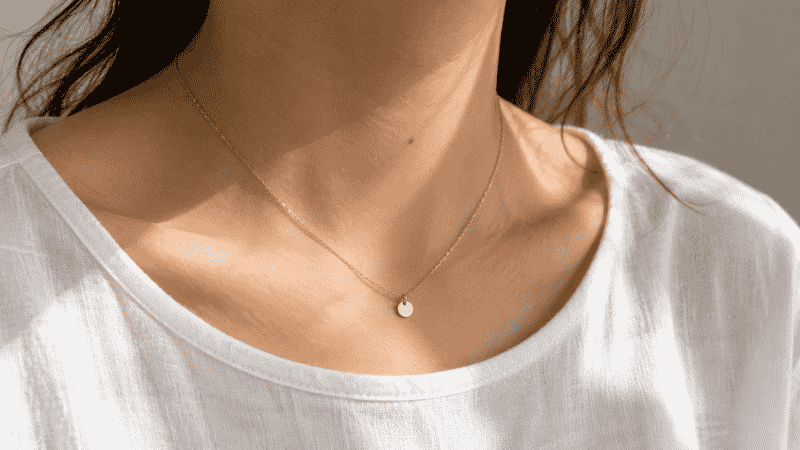
There’s a particular kind of getting-dressed morning that feels effortless. You reach for the same thin gold necklace you always wear, add the small hoops that have been in your ears for three days straight, maybe a simple ring — and somehow the whole outfit is finished. Not because the jewelry is dramatic, or because it cost a lot. Just because it’s right.
That’s what minimalist jewelry actually is. Not an aesthetic trend you have to consciously adopt, not a capsule collection you have to curate all at once. It’s a philosophy about choosing pieces that disappear into your life so completely that you stop thinking about them — and notice immediately when they’re not there.
Most people who are drawn to this kind of jewelry aren’t looking for simplicity for its own sake. They’re looking for something that works with everything, that travels easily, that doesn’t require thought at 7am, and that won’t go out of style by next season. This guide is about how to find those pieces, what makes minimalist jewelry actually worth buying, and how to build a collection that feels genuinely yours rather than a replica of someone else’s aesthetic.
Key Takeaways
- Minimalist jewelry is defined by restraint in scale, decoration, and visual noise — not by price or material
- The most wearable minimalist pieces share three qualities: they work across multiple outfit categories, they sit quietly rather than demanding attention, and they’re made from materials that hold up to daily wear
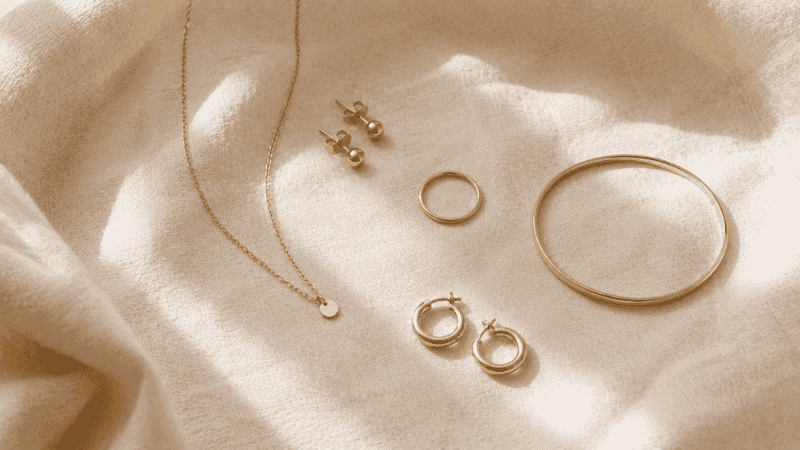
- A functional minimalist jewelry collection can be built around five core pieces: one pair of small studs, one delicate chain necklace, one simple ring, one slim bracelet or bangle, and one pair of small hoops
- Gold vermeil, gold-filled, and sterling silver are the most practical materials at accessible price points — they look right and last long enough to justify the investment
- Minimalist jewelry is one of the most consistently received gift categories because it’s personal without being risky
What Minimalist Jewelry Actually Means
The word “minimalist” gets applied to so many things in jewelry that it’s worth being specific about what it actually means — and what it doesn’t.
Minimalist jewelry is not necessarily dainty. Some minimalist pieces have real presence: a thick plain gold band, a sculptural ear cuff, a clean geometric pendant. What makes them minimalist is the absence of decoration, not the absence of scale. There are no gemstone pavé settings, no intricate filigree, no layered charms, no references to specific aesthetics or themes. The piece is just itself — metal in a clean shape, with nothing extra added.
Minimalist jewelry is not necessarily expensive. The connection between simple jewelry and fine jewelry pricing is real but not absolute. A plain gold-filled chain from a demi-fine brand at $60 and a plain 14k solid gold chain at $300 are both minimalist. The difference is material and longevity, not the design philosophy.
And minimalist jewelry is not the same as boring. The pieces that tend to look most interesting on people are often the most restrained — a single architectural ring, one perfect necklace at the right length, studs that catch light without announcing themselves. Restraint requires confidence. That’s what makes it compelling.
Why Minimalist Jewelry Works So Well for Everyday Wear
Reddit users asking for minimalist jewelry recommendations almost always phrase it the same way: something that looks good but doesn’t feel like a commitment. Something I can wear to work and then out for dinner. Something that won’t go out of style. Something that doesn’t look cheap but also isn’t a splurge I’ll regret.
What they’re describing is wearability — the quality that makes a piece part of how you move through your day rather than something you have to manage or think about.
Minimalist pieces are wearable because they don’t compete with outfits. A delicate chain necklace works with a crisp button-down, a casual linen tee, a silk blouse for a nice dinner. It’s not taking a position on what kind of look you’re going for, so it fits all of them. A statement piece — anything bold, thematic, or very on-trend — is by nature more situational. It suits some outfits and clashes with others.
They’re also wearable because they’re physically unobtrusive. You don’t have to remove them before a meeting because they’re distracting. You don’t have to take them off before bed because they’re uncomfortable. You don’t have to choose outfits around them. They just exist, quietly enhancing without requiring anything in return.
This is what the Financial Times meant when jewelry expert Mie Ejdrup described the new dainty as “an intimate, discreet aesthetic that’s for every day” — pieces designed to be “life-proof,” worn almost like a second skin.
The Five Pieces of a Minimalist Jewelry Foundation
If you’re building from scratch, or rebuilding after years of accumulating pieces that don’t quite work together, these five categories are where to start.
One pair of small stud earrings. The most foundational piece in any minimalist collection. Small — under 8mm — in your metal of choice. The shape can be a simple ball, a small disc, a tiny geometric form. They go in the morning and don’t come out until you want them to. Everything else in your collection can change; this pair stays.
One delicate chain necklace. Worn alone or as the foundation of occasional layering. The right length depends on your neckline preference — 16 inches sits at the collarbone, 18 inches falls just below it. A pendant is optional; a plain chain is equally beautiful and more versatile. Material matters here: this is the piece worth investing in, because you’ll wear it constantly.
One simple ring. Plain band, thin profile, your metal of choice. Worn on whatever finger feels natural. It doesn’t need to mean anything or match anything. It’s just a clean shape that makes your hand look more finished. A thin stacking ring in gold or silver is the lowest-commitment version; a slightly wider plain band has more presence if you want one piece to do more work.
One slim bracelet or bangle. This is the most optional of the five, because not everyone is a wrist person. But for those who are: a single thin chain bracelet or a slim bangle in your metal of choice adds dimension without complexity. The key is “one” — a minimalist wrist stack starts with one piece that works alone.
One pair of small hoops. Different from studs in the way they move and catch light. Hoops between 12mm and 18mm — close to the ear, not large enough to swing dramatically — are the most universally flattering and the most wearable. These are the pair you reach for when studs feel too quiet and you want something with a little more presence without crossing into statement territory.
What to Look for When Buying Minimalist Jewelry

The design of minimalist jewelry is by definition simple, which means the quality of materials and construction becomes the main differentiator. Here’s what to pay attention to.
Material. For pieces you’ll wear daily, the material determines how long they’ll look the way they do now. Gold-filled and gold vermeil are the most practical options at accessible prices — significantly more durable than standard gold plating, with a warmth and richness that reads as elevated. Sterling silver is the best option in its price range for cool-toned preferences, but requires more maintenance to prevent tarnishing. Solid gold (14k) is worth the investment for the one or two pieces you’ll genuinely never take off.
Weight and finish. Minimalist pieces should feel present without being heavy. A chain that’s too fine looks insubstantial; one that’s too thick crosses into statement territory. The right weight has a quality to it — you feel it when you put it on, and forget it’s there within an hour. Finish should be consistent: no rough edges, no visible seams, no plating that looks uneven straight out of the box.
Clasp quality. On necklaces and bracelets, the clasp is the most stress-tested component. A lobster clasp that closes with a satisfying click, smooth and secure, is a good sign about the piece’s overall construction. A flimsy clasp that requires two hands and a prayer suggests the rest of the piece reflects the same approach to quality.
Scale in proportion to your frame. This is where minimalist jewelry gets personal. Pieces that look beautifully subtle on one person can disappear on another. If you have a narrower frame or smaller features, very fine chains and tiny pendants will look intentional. If you have a larger frame, slightly more substantial pieces — still minimal in design, but with more physical presence — will feel more proportionate and less like an afterthought.
Minimalist Jewelry as a Gift
This is where the category really excels, because minimalist jewelry solves the fundamental gift problem: it’s personal enough to feel considered, but restrained enough to be unlikely to miss.
A bold, statement piece as a gift is a risk — it reflects your taste as much as theirs, and if it’s not quite right for how they dress, it’s beautiful but unwearable. A minimalist piece in their metal preference (observable from what they already wear) and in a clean, classic design almost always works. It’s a piece that says “I noticed what you wear and I chose something that fits how you dress” — which is a significantly more thoughtful gift than something impressive but out of context.
For a birthday: a delicate chain necklace, a simple pair of hoops, or a plain stacking ring. Pieces that add to what she already has rather than requiring her to build around something new.
For a best friend: matching minimalist pieces — two thin chain bracelets, two tiny initial pendants — that work individually and as a set without being obviously “friendship jewelry.”
For a mother: a simple gold necklace at a flattering length, or small pearl or diamond studs that she’ll wear for decades. Understated and lasting.
Building Your Collection Incrementally
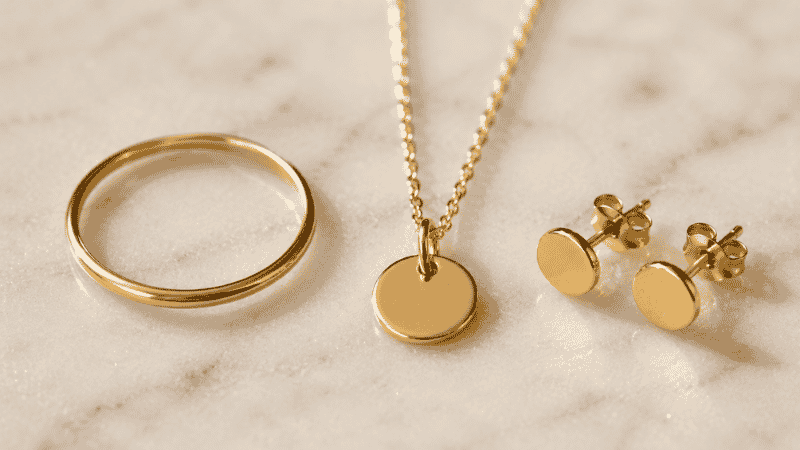
The temptation when discovering minimalist jewelry is to buy everything at once — a full set of matching pieces from one brand, six stacking rings, three necklaces in different lengths. This usually produces a collection that looks assembled rather than collected.
The pieces that feel most personal are the ones added one at a time, with gaps between them. You wear the chain for a few weeks and notice what it’s missing — maybe a pair of earrings that feel slightly more elevated than your current studs. You buy those. You wear both for a month and realize a simple ring would complete the picture. You find one you love. The collection builds itself around your actual life rather than an imagined version of your style.
This approach also protects against the specific frustration of buying a matching set only to find that half the pieces don’t suit you. A curated minimalist collection usually has pieces from different brands, different years, different price points — and that variety is part of what makes it feel real.
FAQ
What is minimalist jewelry? Minimalist jewelry is defined by restraint — clean shapes, simple materials, no heavy decoration or ornamentation. It’s not defined by size (some minimalist pieces have real presence) or price. What makes jewelry minimalist is the absence of complexity: one metal, one clean form, nothing extra.
What metal is best for minimalist jewelry? Gold (14k solid, gold-filled, or gold vermeil) is the most popular choice for minimalist jewelry because its warmth reads as elevated without requiring decoration to look finished. Silver (sterling 925) works equally well for cooler-toned preferences. The material matters more in minimalist pieces than in decorative ones because the metal is the whole design.
Is minimalist jewelry in style? Minimalist jewelry has been a consistent presence in fashion for over a decade and shows no signs of cycling out. Unlike trend-driven pieces, minimalist styles don’t age — a plain gold chain from 2015 looks identical to one from 2025. This longevity is part of its appeal: it’s not a trend to chase but a permanent category of wearable, lasting design.
How do I build a minimalist jewelry collection? Start with the five foundations: small studs, a delicate chain necklace, a simple ring, a slim bracelet, and small hoops — all in your metal of choice. Add pieces incrementally as you identify what’s missing rather than buying a full set at once. Consistency in metal tone creates cohesion across pieces from different sources.
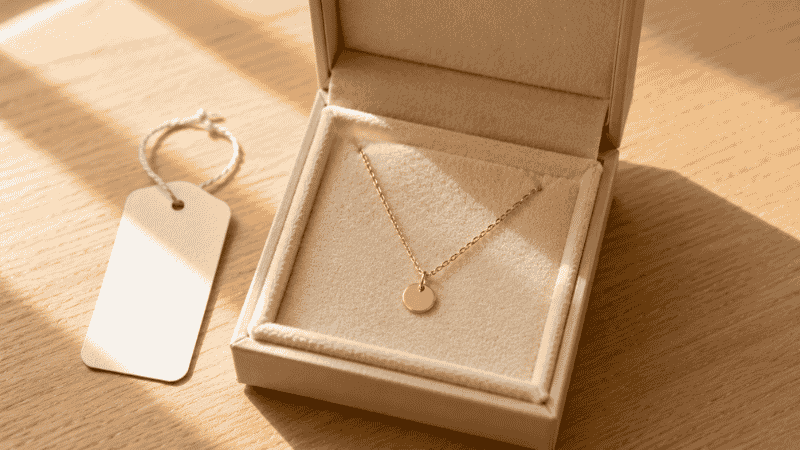
What’s a good minimalist jewelry gift? A delicate chain necklace, a pair of small hoops, or a simple stacking ring in the recipient’s metal preference. Observe what they already wear — metal tone and scale — and choose something that fits naturally into what they’ve built rather than requiring them to adapt to a new aesthetic.
Minimalist jewelry works because it doesn’t ask anything of you. It doesn’t require a specific outfit, a particular mood, or a considered decision every morning. It just sits there, quietly doing what good design always does — making everything feel slightly more finished without anyone being able to say exactly why.
That’s the thing about pieces that whisper. You notice when they’re gone more than when they’re there.
Related reading:
- How to Choose Jewelry That Actually Feels Like You → [internal link]
- What Is Gold Vermeil? The Honest Guide → [internal link]
- How to Layer Necklaces: The Formula That Always Works → [internal link]
Sources:
- Financial Times / Finematter — The New Dainty: Minimalist Jewelry as Everyday Wear (Mie Ejdrup, co-founder of Finematter)
- MEXC News — The Rise of Minimalist Jewelry: How Subtle Pieces Elevate Everyday Style (January 2026)
- AOL / Vogue — Sculptural, Classic, and Modern: The Best Minimalist Jewelry Brands to Wear Now
- Abbas Lokhandwala, Founder & CEO of MCKER — quoted on minimalist jewelry design philosophy