
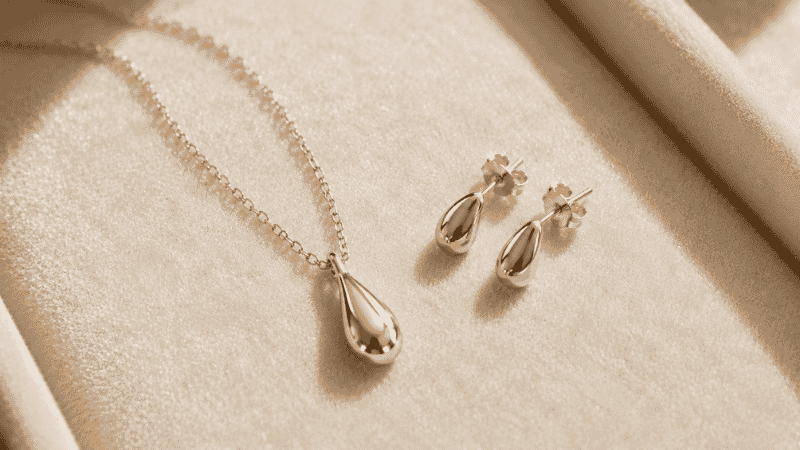
You bought the necklace because it was beautiful. You wore it a few times, loved it, and then put it away. Three months later you open the drawer and find something that looks nothing like what you remember — dull, slightly greenish in spots, with a patchy finish that no amount of rubbing seems to fix.
Tarnish is one of those things that feels sudden but is always gradual. It happens while the jewelry sits in your drawer, while you sleep in it, while it waits in a pile with other pieces. And once it’s set in, reversing it is a project. Preventing it in the first place takes almost no effort by comparison.
This guide covers what actually keeps jewelry from tarnishing — based on the real chemistry behind why tarnish happens, not just a recycled list of tips. You’ll also find out which commonly suggested hacks work, which are overstated, and what to do if a piece has already started to go.
Key Takeaways
- Tarnish is caused by chemical reactions between metal and environmental factors — primarily moisture, oxygen, sulfur compounds, and the chemicals in skin products
- The single most effective habit for preventing tarnish costs nothing: take jewelry off before water exposure and wipe it dry before storing
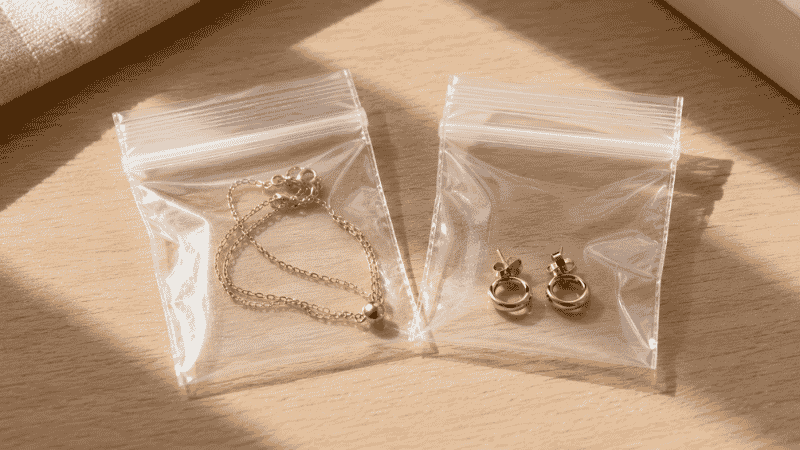
- Airtight storage dramatically slows tarnishing — small zip-lock bags or anti-tarnish pouches work better than open jewelry boxes for most pieces
- Silica gel packets inside storage containers absorb moisture and meaningfully extend the life of plated and silver pieces
- Clear nail polish works as a barrier for plated jewelry worn against skin, but needs reapplication every few weeks and isn’t suitable for all pieces
Why Jewelry Tarnishes: The Actual Reason
Understanding what causes tarnish makes prevention feel logical rather than arbitrary.
Tarnish is a chemical reaction, not physical dirt. When metal — particularly silver, copper, and the base metals used in plated jewelry — comes into contact with sulfur compounds in the air, it forms a new compound on the surface. For silver, that compound is silver sulfide, which creates the dark gray or black patina most people recognize as tarnish. For copper and brass (common base metals in plated jewelry), oxidation produces a greenish compound called copper carbonate — the same process that turned the Statue of Liberty green, just faster and closer to your collarbone.
Gold itself doesn’t tarnish. Neither does platinum. But 14k and 10k gold contain alloy metals — copper, silver, zinc — that can react over time, particularly in lower-karat pieces. And gold-plated jewelry tarnishes when the base metal beneath the plating is exposed through wear or damage.
The main triggers for faster tarnishing:
Moisture and humidity. Water accelerates the oxidation and sulfide reactions significantly. This is why jewelry stored in bathrooms tarnishes faster than jewelry stored in bedrooms, and why pieces worn during sweaty workouts or showers show wear faster than occasional-wear pieces.
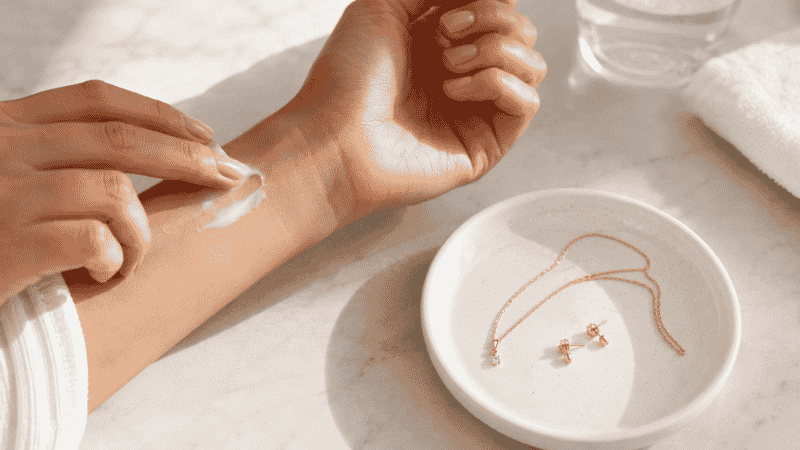
Sulfur compounds. These are present in air pollution, rubber, certain foods, and — most relevantly — in many personal care products. Perfume, hairspray, lotion, and sunscreen all contain compounds that react with metal surfaces. This is why jewelry put on before these products tarnishes faster than jewelry put on after.
Skin chemistry. Your skin’s natural oils, sweat composition, and pH affect how quickly metal reacts against it. Some people’s body chemistry is simply more reactive with metal — the same piece can tarnish in weeks on one person and stay pristine for months on another.
Air exposure. Even without moisture or chemicals, prolonged air exposure causes gradual oxidation. Jewelry stored in open dishes or spread across a dresser tarnishes faster than jewelry stored in closed containers.
The Habits That Actually Prevent Tarnishing
These are the practices that make a measurable difference — ranked roughly by impact.
Put jewelry on last, take it off first. This one habit has the most impact on how long plated and silver jewelry stays bright. Applying perfume, lotion, sunscreen, and hairspray before putting on jewelry prevents these products from sitting on metal surfaces. Taking jewelry off before washing your hands, showering, or working out prevents the most damaging water and chemical exposure.
Wipe pieces dry before storing. After wearing, a quick pass with a dry microfiber cloth removes skin oils and moisture before they have time to react with the metal overnight. It takes thirty seconds. Over months, it makes a visible difference — pieces that get wiped down regularly stay significantly brighter than those that don’t.
Don’t sleep in jewelry. Sweat during sleep, combined with the friction of fabric against metal, accelerates tarnishing. Pieces worn 24 hours a day show wear faster than pieces taken off at night, even with identical care otherwise.
Keep jewelry away from the bathroom. Daily humidity from showers and baths raises the moisture level in bathroom air consistently. Even pieces stored in a closed box in a bathroom tarnish faster than the same pieces stored in a bedroom. This is a small change with a noticeable effect.
Keep pieces from touching each other. Metal-on-metal contact causes micro-scratches that compromise surface finishes and create points where tarnish takes hold faster. Individual storage — pouches, compartments, separate bags — prevents this while also keeping chains from tangling.
Storage That Actually Slows Tarnishing
How you store jewelry matters almost as much as how you wear it. The goal is to minimize exposure to air and moisture while the piece is sitting unused.
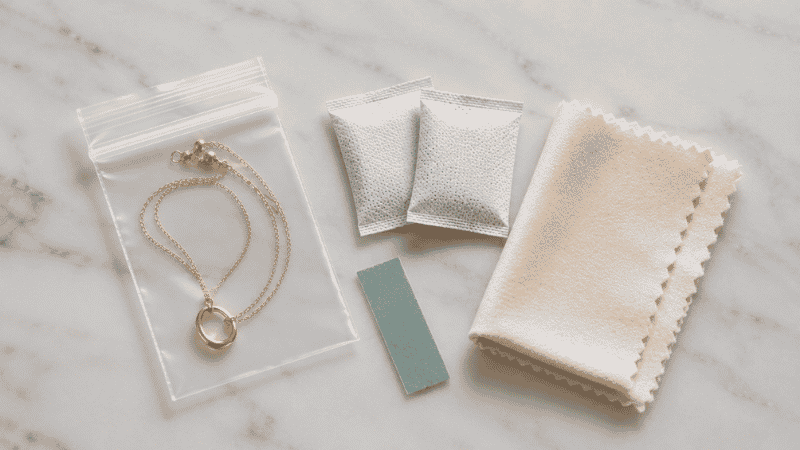
Airtight bags. Small zip-lock bags — the kind used for craft storage or even standard kitchen zip-locks — are one of the most effective and inexpensive tarnish prevention methods for silver and plated pieces. Removing as much air as possible before sealing creates a low-oxygen environment that dramatically slows the reactions that cause tarnish. Anti-tarnish bags, sold by jewelry supply stores, do the same thing with the added benefit of being made from materials that neutralize sulfur compounds.
Silica gel packets. These small packets absorb moisture from the air inside storage containers. Drop one or two into your jewelry box, into a drawer where you keep jewelry, or into storage bags for pieces you wear less often. They’re often free — shoe boxes, vitamin bottles, and many shipped packages include them — or inexpensive to buy. Replacing them every few months keeps them effective.
Anti-tarnish strips. These are small paper strips treated with compounds that absorb sulfur from the air before it can react with metal. They’re particularly effective for silver. Place one in a closed jewelry box or storage container. They’re inexpensive and last several months before needing replacement.
Fabric-lined jewelry boxes with closed lids. Better than open dishes or uncovered trays, because they limit air exposure. The fabric lining also prevents pieces from scratching against hard surfaces.
Individual soft pouches. For pieces you care about and wear less frequently, individual velvet or microfiber pouches provide both protection from contact scratching and some reduction in air exposure. This is the storage method most jewelers use for their own pieces.
The Clear Nail Polish Question: Does It Work?
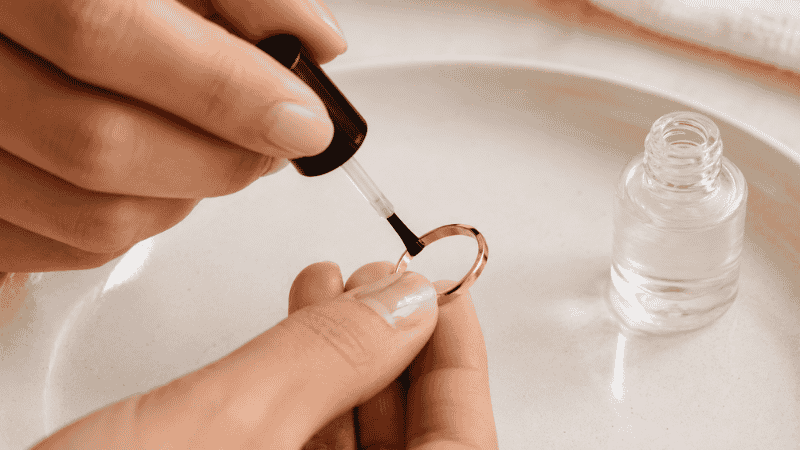
This comes up constantly in jewelry forums and Reddit threads, and the honest answer is: yes, with conditions.
Clear nail polish creates a physical barrier between the metal and both air and skin. Applied thinly to the inner surface of a ring band or the back of a pendant — the areas that make contact with skin — it prevents direct metal-skin contact and slows the oxidation reactions at those points. For plated jewelry that you want to wear regularly without accelerating wear, this is a genuinely useful technique.
The conditions:
It needs reapplication. Clear nail polish wears away with use, usually within a few weeks of regular wear. When it starts to peel or look uneven, remove it with nail polish remover and reapply a fresh coat.
It’s not suitable for all pieces. Don’t apply it to pieces with gemstones, intricate settings, or surfaces where it could pool and look cloudy. It works best on smooth metal surfaces — the inside of a simple band, the back of a flat pendant, the clasp of a necklace.
It can cause reactions on sensitive skin. Standard nail polish contains chemicals that some people react to. If you have sensitive skin, look for three-free or five-free formulas that exclude the most common irritants.
It doesn’t prevent all tarnishing — it prevents contact tarnishing at the points where metal touches skin. The rest of the piece is still exposed to air and should be stored and cared for normally.
What to Do If Tarnishing Has Already Started
Prevention is easier, but tarnish that’s already set in isn’t necessarily permanent.
Light tarnish on silver — the early gray dulling — often responds well to a soft polishing cloth. Anti-tarnish cloths (available from jewelry supply stores) are treated to remove light tarnish without scratching.
Moderate tarnish on silver responds to the baking soda method: line a bowl with aluminum foil, place the silver piece on it, sprinkle baking soda over the piece, and pour hot water over everything. The chemical reaction between the foil, baking soda, and water pulls the silver sulfide off the metal and onto the foil. Rinse thoroughly afterward.
Tarnish on plated jewelry is more complicated. If the discoloration is surface buildup, a gentle wipe with a damp cloth and mild soap may help. If the discoloration is the base metal showing through worn plating — patches of a different color that don’t wipe off — the plating has been compromised. Surface cleaning won’t restore it; re-plating by a jeweler is the only real fix.
For solid gold: genuine tarnish (dullness from alloy oxidation rather than surface grime) on 14k or 18k gold can be addressed with professional polishing. This is a jeweler service that removes microscopic surface scratches along with oxidation, restoring the original shine.
A Note on Different Metals
Not all metals tarnish at the same rate or for the same reasons, and the prevention strategy should match the metal.
Sterling silver (925): The most tarnish-prone fine metal. Tarnishes from sulfur in air even without moisture. Anti-tarnish storage — airtight bags, anti-tarnish strips — makes the biggest difference here. Polish regularly with a silver cloth.
Gold vermeil: Gold over sterling silver. The gold surface is tarnish-resistant, but if the gold layer wears thin, the silver underneath will tarnish. Keep dry, store airtight, avoid harsh chemicals.
Gold-filled: Very tarnish-resistant. The thick gold layer rarely shows tarnishing under normal conditions. Basic care — wipe dry, store away from chemicals — is usually sufficient.
Standard gold plating over brass: The most vulnerable category. Once the gold layer wears through, the brass oxidizes quickly and visibly. Clear nail polish barrier on skin-contact areas, airtight storage, and keeping it dry extends plating life.
Stainless steel: Highly tarnish-resistant. Requires the least care of any common jewelry metal.
FAQ
Does clear nail polish really keep jewelry from tarnishing? Yes, as a barrier between metal and skin at contact points — the inside of a ring band, the back of a pendant. It slows tarnishing where metal touches skin, but doesn’t protect the whole piece from air exposure. It needs reapplication every few weeks and isn’t suitable for all pieces or all skin types.
How do I keep gold plated jewelry from tarnishing? The most effective habits: put it on last after all products have dried, take it off before water exposure, wipe it dry before storing, and store in an airtight bag or anti-tarnish pouch. Silica gel packets in your storage space absorb moisture that would otherwise accelerate the process.
Does storing jewelry in a zip-lock bag prevent tarnishing? Yes, meaningfully. An airtight bag limits oxygen and moisture exposure, which are the primary drivers of tarnish reactions. It’s one of the most effective and affordable storage solutions for silver and plated pieces.
Why does my jewelry tarnish so quickly? The most common reasons: storing in a bathroom (high humidity), wearing before lotion or perfume has dried, sleeping in it, or individual skin chemistry that’s more reactive with metal. Changing storage location and the order you apply products makes a noticeable difference for most people.
Can I reverse tarnish once it’s happened? Light tarnish on silver responds to polishing cloths and the baking soda and foil method. Moderate tarnish on solid metals can be professionally polished. Plated jewelry where the base metal is showing through worn areas cannot be restored by cleaning — it needs re-plating or replacement.
Keeping jewelry from tarnishing isn’t complicated, but it is consistent. The pieces that stay beautiful longest are the ones that get wiped down after wearing, stored in something closed rather than left in a pile, and kept away from the products and conditions that accelerate wear.
None of it is difficult. It’s just a matter of making the right habits feel as natural as putting the jewelry on in the first place.
Related reading:
- How to Clean Gold Jewelry at Home (Without Damaging It) → [internal link]
- Does Gold Plated Jewelry Tarnish? Here’s the Honest Answer → [internal link]
- What Is Gold Vermeil? The Honest Guide → [internal link]
Sources:
- BriteCo Jewelry Insurance — Does Clear Nail Polish Keep Jewelry From Tarnishing? (September 2023)
- The Chubby Paw — Does Clear Nail Polish Keep Jewelry From Tarnishing (January 2025)
- AOL / Taste of Home — 8 Clever Tips & Hacks That Prevent Silver From Tarnishing
- Amorium Jewelry — How to Stack Bracelets: The Complete Guide (March 2026)