
Walk into any jewelry store — or scroll through any brand’s website — and you’ll encounter a vocabulary that feels designed to confuse. Gold vermeil. Gold filled. 14k. 925. PVD coating. Gold plated. Sterling silver. Surgical steel. Each term sounds vaguely meaningful, and yet most people couldn’t explain the actual differences if asked.
This isn’t a minor inconvenience. The material a piece of jewelry is made from determines how long it will last, whether it will tarnish, whether it’s safe for sensitive skin, how to care for it, and ultimately whether the price you paid was reasonable or not. Two necklaces that look identical in a photograph can behave completely differently over six months of daily wear — and the difference is entirely in the metal.
This guide covers every major jewelry metal and material category in plain language. No jargon, no brand marketing, no vague reassurances. Just what each term means, what it looks like in practice, and how to use that knowledge when you’re deciding what to buy or how to care for what you already own.
Key Takeaways
- Jewelry metals fall into four broad categories: solid precious metals, layered materials (plated, filled, vermeil), base metals, and specialty metals
- The most important factors to consider for any piece are: durability for how you’ll wear it, hypoallergenic properties if you have sensitive skin, and care requirements for your lifestyle
- Gold content is measured in karats (10k, 14k, 18k, 24k) — the higher the karat, the more pure gold and the softer the metal
- Gold plated, gold vermeil, and gold filled are three distinct categories with very different durability profiles — plating lasts months, vermeil lasts years, gold filled lasts decades
- Sterling silver (925) is real silver — not a budget alternative to gold, but a distinct and beautiful metal with its own properties and care requirements
Solid Gold: The Foundation
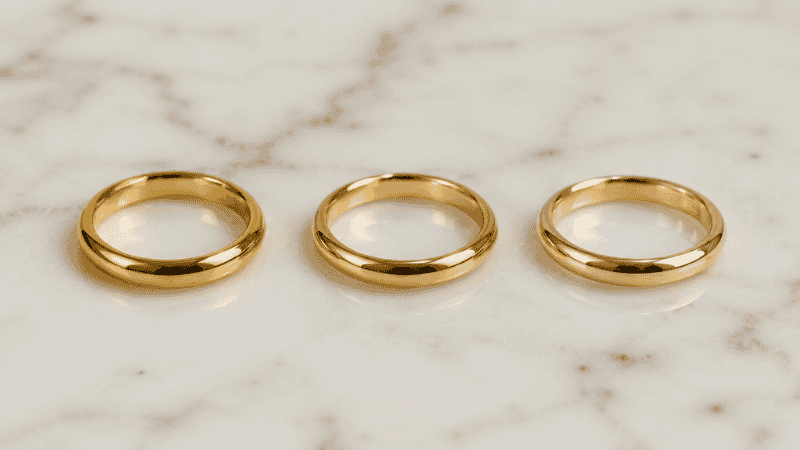
Solid gold is the most durable and longest-lasting jewelry material. Unlike layered or plated materials, solid gold is the same composition throughout — there’s no surface coating to wear away, no base metal underneath to tarnish or react with skin.
Gold in its pure form (24 karat) is too soft to hold its shape in jewelry. It bends and scratches from everyday contact. So virtually all solid gold jewelry is an alloy — gold mixed with other metals to add strength. The karat number tells you exactly how much of that alloy is gold.
24k gold: 99.9% pure gold. Rarely used in everyday jewelry because of its softness. Most common in investment pieces, coins, and some Asian jewelry traditions where high purity is culturally valued.
18k gold: 75% pure gold. The international standard for fine jewelry. Rich warm color, noticeable weight, soft enough to scratch over time but durable enough for most everyday wear. The standard used by most luxury and high-end jewelry brands.
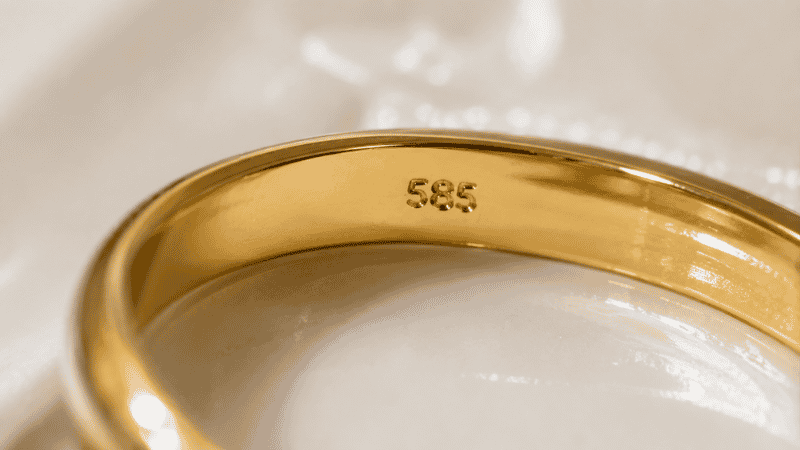
14k gold: 58.3% pure gold. The most common karat in the United States for everyday fine jewelry. More durable than 18k because the higher alloy content makes it harder. Slightly lighter in color. The practical choice for rings and bracelets that experience daily friction.
10k gold: 41.7% pure gold. The minimum legal standard to be called “gold” in the United States. More durable than higher karats but significantly less gold content. Often used in lower-priced fine jewelry.
What the karat stamp looks like: 18k gold is stamped “18k,” “750,” or “18kt.” 14k is stamped “14k,” “585,” or “14kt.” 10k is stamped “10k” or “417.”
Color variations in solid gold: Yellow gold is the natural color of the gold alloy. White gold is yellow gold mixed with white metals (palladium or nickel) and usually rhodium-plated to achieve a bright silver-white finish. Rose gold gets its warm pinkish tone from a higher copper content in the alloy.
→ For a deeper look at choosing between karats: [14k vs 18k Gold: What’s the Real Difference?]
Gold Plated: The Most Common, The Least Durable
Gold plated jewelry is the most widely available gold-toned jewelry category and also the most misunderstood. The term covers an enormous range of quality — from pieces that last a week to pieces that hold up reasonably well for a year or more.
What it is: A thin layer of gold applied to a base metal (usually brass, copper, or stainless steel) through an electroplating process. The gold ions bond to the surface of the base metal, creating a gold-colored exterior.
The critical variable: Plating thickness. Standard gold plating is 0.5 microns thick or less — one two-thousandth of a millimeter, genuinely invisible to the naked eye. “Heavy” gold plating might reach 1 to 2.5 microns. The thickness determines how long the piece holds its color before the base metal shows through.
What happens when it wears: As the gold layer thins from friction, moisture, and chemical exposure, the base metal underneath becomes exposed. If the base is brass or copper, you get discoloration, tarnishing, and potentially green marks on skin. If the base is stainless steel, the wear is less reactive but still visible as a color change.
Stamps to look for: “GP” (gold plated), “GEP” (gold electroplate), “HGE” (heavy gold electroplate). No stamp at all on an inexpensive piece usually indicates gold plating.
Who it’s right for: Trend pieces you don’t expect to wear indefinitely. Occasional-wear jewelry where longevity isn’t the primary concern. Pieces at price points where the lower cost outweighs the shorter lifespan.
Gold Vermeil: The Regulated Middle Ground
Gold vermeil (pronounced “ver-MAY”) is a legally defined category that sits between standard gold plating and gold filled — and is significantly better than most people realize.
What it is: Gold plating over a sterling silver base, subject to legal requirements set by the Federal Trade Commission. To be called gold vermeil in the United States, a piece must have a sterling silver base, at least 2.5 microns of gold plating, and the gold must be at least 10 karat.
Why the legal definition matters: Unlike “gold plated,” which has no thickness requirement and no base metal requirement, “gold vermeil” is held to actual standards. A piece stamped or described as vermeil from a reputable brand has five times more gold than standard plating and sits over hypoallergenic sterling silver rather than reactive brass or copper.
Durability in practice: With proper care — keeping it dry, wiping after wear, storing in airtight pouches — quality vermeil pieces can last one to three years of regular wear, and significantly longer for occasional-wear pieces.
The hypoallergenic advantage: Because the base metal is sterling silver rather than brass or copper, vermeil is significantly safer for sensitive skin. When the gold layer eventually thins, the silver underneath doesn’t cause the green discoloration or reactions that brass bases can.
Stamps to look for: “925” on the piece (indicating sterling silver base), combined with brand descriptions of vermeil or gold plating thickness.
→ For the complete vermeil breakdown: [What Is Gold Vermeil? The Honest Guide]
Gold Filled: The Most Durable Non-Solid-Gold Option
Gold filled is the most durable non-solid-gold material available, and it’s frequently underestimated because the name sounds similar to gold plated.
What it is: A thick layer of gold alloy mechanically bonded to a brass core through heat and pressure. Not electroplated — physically fused. The gold content must be at least 5% of the total weight of the piece, regulated by the FTC.
The durability difference: That 5% gold content means gold filled contains roughly 100 times more gold than standard gold plating. The bonded construction means the gold doesn’t separate or peel the way plating does — it wears away gradually from the surface, the way solid gold would. In practice, gold filled pieces can last decades of daily wear.
The trade-off: The brass core means gold filled is slightly less hypoallergenic than gold vermeil (which has a sterling silver base). For most people with metal sensitivities, the thick gold layer keeps the brass from making skin contact. For anyone with severe metal sensitivities, vermeil’s silver base is preferable.
Stamps to look for: “GF” or “1/20 14k GF” — indicating gold filled with 14k gold comprising 1/20th of total weight.
→ For the complete gold filled breakdown: [What Is Gold Filled Jewelry? The Complete Guide]
Sterling Silver: A Material in Its Own Right
Sterling silver is not a budget alternative to gold. It’s a distinct precious metal with its own aesthetic, properties, and care requirements — and one of the most beautiful materials available for everyday jewelry.
What it is: 92.5% pure silver alloyed with 7.5% other metals (usually copper) for strength. The “925” stamp indicates this purity. Pure silver, like pure gold, is too soft for practical jewelry use.
The tarnishing reality: Silver reacts with sulfur compounds in air to form silver sulfide — the dark gray or black patina most people recognize as tarnish. This is normal and reversible, not damage. A silver polishing cloth or the baking soda and aluminum foil method restores the original shine.
The appeal: Silver has a cooler, brighter tone than gold. It complements cooler skin undertones beautifully. Many people find silver’s clean, clear quality more versatile for certain aesthetics — particularly minimalist, Scandinavian, or clinical styles that gold’s warmth would fight against.
Care requirements: More than gold. Sterling silver needs to be stored in airtight containers or anti-tarnish bags when not worn. Regular polishing with a silver cloth maintains the shine. Avoid leaving it exposed to air for extended periods.
Stamps to look for: “925,” “Sterling,” or “Ster.”
→ For tarnish prevention across all metals: [How to Keep Jewelry From Tarnishing: What Actually Works]
Stainless Steel: The Most Practical Everyday Metal
Stainless steel doesn’t have the prestige of gold or silver, but it has properties that make it genuinely excellent for certain uses — particularly high-wear, everyday pieces.
What it is: A steel alloy with at least 10.5% chromium content, which creates a passive layer of chromium oxide on the surface that resists corrosion. Jewelry-grade stainless steel is typically 316L (surgical grade) or 304, both of which are hypoallergenic and highly tarnish-resistant.
The practical advantages: Stainless steel doesn’t tarnish, doesn’t require special care, handles water and sweat without issue, and is significantly harder than gold or silver. For pieces worn during workouts, outdoor activities, or in environments where jewelry takes more physical stress, stainless steel outperforms precious metals in durability.
PVD coating: Many stainless steel jewelry pieces come with PVD (Physical Vapor Deposition) gold or rose gold coating — a vacuum-applied coating that is more durable than standard electroplating. PVD-coated stainless steel is one of the most wear-resistant options in affordable jewelry.
The limitation: Stainless steel has a slightly cooler, more industrial tone than gold. It doesn’t have the warmth or the cultural weight of precious metals. For everyday casual wear, this doesn’t matter. For pieces intended to feel luxurious or for formal occasions, the difference is noticeable.
Brass and Copper: The Base Metals
Brass and copper are common base metals in fashion and costume jewelry. They’re inexpensive, easy to work with, and take plating readily — which is why they’re used so widely.
Brass: An alloy of copper and zinc. Takes gold plating well and has a warm tone. The primary cause of green skin marks when plating wears through and the brass oxidizes against skin.
Copper: Warmer tone than brass. Oxidizes more visibly to a greenish patina. Sometimes used intentionally in boho-style jewelry for its natural color.
Both are reactive with skin chemistry and moisture. This is why pieces described only as “gold tone” or “alloy” without specifying the base metal are worth approaching cautiously — they’re almost certainly brass or copper-based, and their behavior over time depends entirely on the plating quality.
Titanium and Niobium: For the Most Sensitive Skin
For people with severe metal sensitivities who react to nearly everything — including sterling silver — titanium and niobium are the genuine hypoallergenic options.
Titanium: Extremely lightweight, extremely strong, completely hypoallergenic. Available in natural silver-gray or in anodized colors. Increasingly common in earring posts and ear wires specifically because of its skin safety.
Niobium: Similar hypoallergenic properties to titanium. Softer and more workable, making it useful for ear wires and small components. Available in anodized colors.
Both are niche materials — you won’t find them in mainstream jewelry stores. But for anyone who has given up on earrings because of consistent reactions, titanium or niobium posts are worth finding.
→ For the full guide on metals and sensitive skin: [Hypoallergenic Jewelry for Sensitive Skin: The Complete Guide]
How to Read Jewelry Stamps and Hallmarks
Every piece of quality jewelry should have a hallmark — a small stamp identifying the metal content. Knowing how to read these takes thirty seconds and gives you real information.
| Stamp | What It Means |
|---|---|
| 999 / 24k | 99.9% pure gold |
| 750 / 18k | 75% gold (18 karat) |
| 585 / 14k | 58.5% gold (14 karat) |
| 417 / 10k | 41.7% gold (10 karat) |
| GF / 1/20 GF | Gold filled |
| GP / GEP | Gold plated |
| 925 / Sterling | Sterling silver (92.5% silver) |
| 316L / Surgical Steel | Stainless steel jewelry grade |
| No stamp | Unknown — test or verify before purchasing |
Choosing the Right Metal for How You Live
The right material isn’t the most expensive one — it’s the one that matches how you’ll actually wear the piece.
For a ring you’ll never take off: 14k solid gold or gold filled. These materials handle the constant friction, moisture, and contact that a permanently-worn ring experiences. Standard plating or vermeil will show wear much faster on a ring than on any other piece.
For a necklace you wear daily: Gold vermeil or gold filled are both excellent. Necklaces experience less friction than rings, so the durability advantage of gold filled matters less. Vermeil’s sterling silver base gives it a slightly more refined feel at a comparable price point.
For earrings with sensitive ears: 18k solid gold, gold vermeil, titanium, or niobium. The post or ear wire makes direct contact with pierced skin, so hypoallergenic properties are particularly important here.
For active wear or travel: Stainless steel with PVD coating. Water-resistant, scratch-resistant, no special care required.
For occasional wear or trend pieces: Standard gold plating is entirely appropriate. If you’re wearing something a few times a season rather than daily, the lifespan of plating is more than sufficient.
A Note on Caring for Each Metal
Every metal has a slightly different care approach, and knowing which you have determines how you should treat it.
Solid gold requires the least intervention — a warm water and mild soap clean when dull, and basic storage practices. Gold filled is similarly low-maintenance, needing only regular wiping and protection from harsh chemicals. Gold vermeil needs the same care as sterling silver — kept dry, stored airtight, wiped after wearing. Sterling silver requires the most consistent attention — polishing cloth, anti-tarnish storage, regular cleaning to reverse natural tarnishing.
→ For full cleaning instructions: [How to Clean Gold Jewelry at Home (Without Damaging It)] → For tarnish prevention across all materials: [How to Keep Jewelry From Tarnishing: What Actually Works]
FAQ
What is the most durable non-solid-gold jewelry material? Gold filled, by a significant margin. Its gold layer is at least 5% of the total weight — roughly 100 times more gold than standard plating — and is bonded through heat and pressure rather than electroplating. With daily wear and basic care, gold filled pieces can last decades.
What jewelry metal is best for sensitive skin? 18k solid gold, gold vermeil (sterling silver base), titanium, and niobium are the safest options. Gold filled is usually fine for most sensitivities. Standard gold plating over brass is the most likely to cause reactions when the plating wears through.
What does 925 mean on jewelry? 925 is the hallmark for sterling silver, indicating the piece is 92.5% pure silver. It’s not a gold stamp — a piece marked 925 is silver, not gold, regardless of its color.
Is gold filled the same as gold plated? No — they’re fundamentally different. Gold filled has at least 5% gold by weight, bonded through heat and pressure. Gold plated has a thin surface coating (often 0.5 microns or less) applied through electroplating. Gold filled lasts decades; standard gold plating lasts months to a couple of years.
How do I know what metal my jewelry is made of? Look for a hallmark stamp — inside a ring band, on a necklace clasp, or on the back of a pendant. The stamp tells you the material. If there’s no stamp and you need certainty, a jeweler can test the piece inexpensively.
Understanding jewelry metals changes the way you shop, the way you care for what you own, and the way you decide what’s worth spending more on. The vocabulary isn’t designed to confuse — it’s just industry shorthand that nobody bothers to translate.
Now you have the translation.
Related Reading: The Complete Materials & Care Collection
Every section of this guide links to a deeper article on that specific topic. If something here prompted a question, the answer is in one of these:
- [How to Clean Gold Jewelry at Home (Without Damaging It)] → full cleaning guide for all gold types
- [Does Gold Plated Jewelry Tarnish? Here’s the Honest Answer] → lifespan, care, and what to expect
- [What Is Gold Vermeil? The Honest Guide] → the complete vermeil breakdown
- [What Is Gold Filled Jewelry? The Complete Guide] → manufacturing, durability, and comparison
- [14k vs 18k Gold: What’s the Real Difference?] → color, durability, price, and decision guide
- [How to Tell If Jewelry Is Real Gold: 6 At-Home Tests] → verification methods and hallmark reading
- [How to Keep Jewelry From Tarnishing: What Actually Works] → storage, habits, and the clear nail polish question
Sources:
- Federal Trade Commission — Guides for the Jewelry, Precious Metals, and Pewter Industries
- Halstead Bead — What Is Gold-Filled? FAQ’s for Gold-Filled Jewelry
- Linjer Jewelry — What Is Gold Vermeil? Your Complete Guide (November 2022)
- Borsheims Fine Jewelry — Gold-Plated vs Gold Vermeil vs Gold-Filled: What’s the Difference? (May 2025)
- LYANG & CO. — Gold Plated vs Gold Vermeil vs Gold Filled: The Complete Buyer’s Guide (March 2026)
- Simple & Dainty — Types of Gold Jewelry Explained: Plated, Vermeil, Filled & Solid Gold