
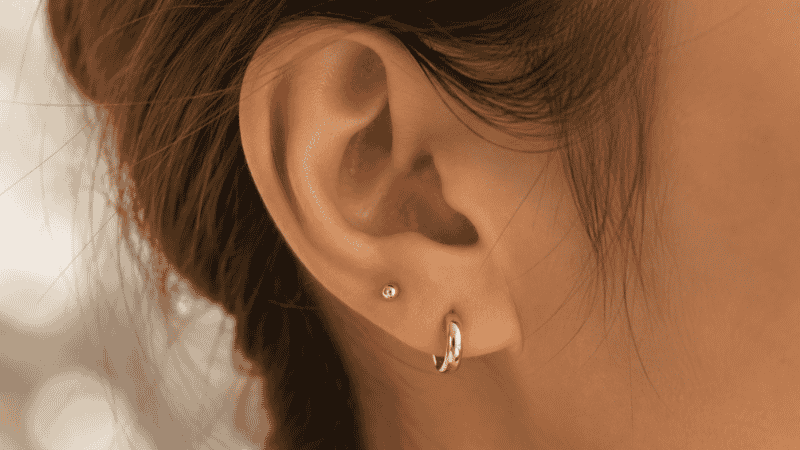
You’re standing in a jewelry store — or browsing a brand’s website at midnight — and you see a pair of earrings described as “huggies.” Or “ear climbers.” Or “threader earrings.” You like how they look in the photo, but you’re not entirely sure how they work, where exactly they sit on the ear, or whether they’d suit the way you actually dress.
Earring vocabulary is its own language, and no one formally teaches it. Most people learn a handful of terms — studs, hoops, drop earrings — and stay within that vocabulary, sometimes missing styles that would actually suit them better. This guide covers every major type of earring in plain language: what it is, how it works, what it suits, and where it finds its most natural home. No jargon, no assumptions about existing knowledge.
By the end, you’ll know exactly what you’re looking at when you see a product description, and which types of earrings are worth exploring for your own collection.
Key Takeaways
- The most versatile everyday earrings are studs (under 8mm) and small huggies (10–16mm) — they work with almost any outfit, hairstyle, or occasion
- Huggie earrings are the most significant earring trend of the last five years: a small hoop that hugs the lobe, combining the simplicity of a stud with the presence of a hoop
- Earrings for sensitive ears should be in implant-grade titanium, 14k or 18k solid gold, or niobium — the post and backing material matters more than the visible part
- Hoop diameter changes the character of the earring dramatically: 12–20mm reads as refined and wearable, 40mm+ becomes a statement
- Drop and dangle earrings are not the same thing — drops have a fixed pendant that doesn’t move, dangles swing freely and create movement
Stud Earrings: The Foundation of Every Jewelry Collection
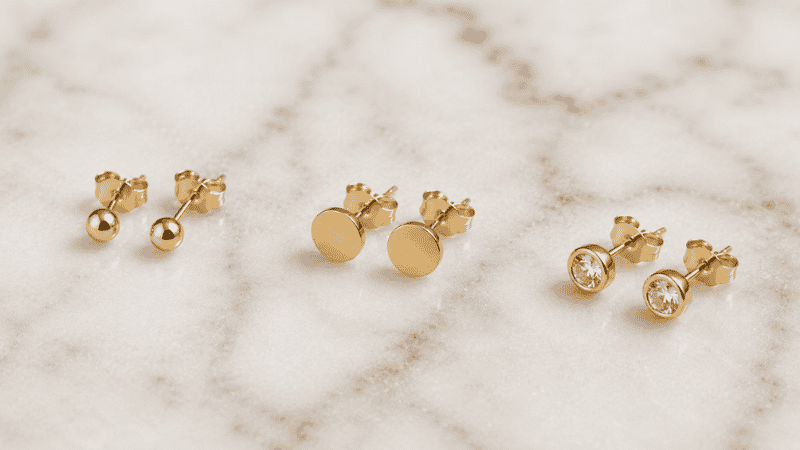
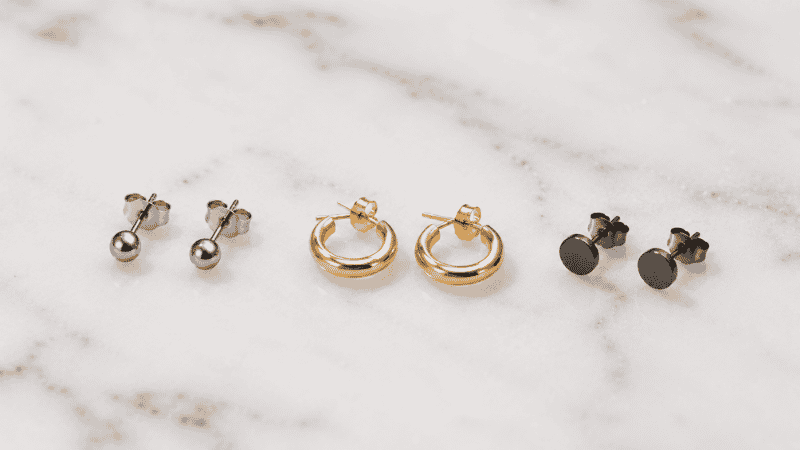
Studs are the simplest earring: a single element — a ball, a small shape, a stone — attached to a straight post that goes through the ear. No movement, no drop. Just a quiet point of presence at the lobe.
Their value is precisely that quietness. A stud doesn’t compete with anything. It works with hair up or down, with a bold necklace or no necklace, in a boardroom or at the gym. The right pair of studs is the earring you forget you’re wearing but would notice immediately if you left them at home.
The size question: Stud diameter is usually measured in millimeters. 3–5mm is very subtle — noticeable only up close. 6–8mm is the most common everyday range, visible and present without demanding attention. 10mm and above starts to become more of a statement, depending on the design.
What suits studs: Every face shape, every hair type, every occasion. Studs are the most universally appropriate earring type for any context.
For sensitive ears: Stud posts are where most reactions happen. If you experience redness, itching, or irritation from earrings, switch to implant-grade titanium or solid 14k gold posts before assuming you’re allergic to all earrings.
As a gift: A quality pair of small gold or silver studs — 6mm, plain or with a small stone — is one of the most universally received earring gifts. It’s the pair most people reach for on their easiest mornings.
Hoop Earrings: The Classic That Never Actually Leaves
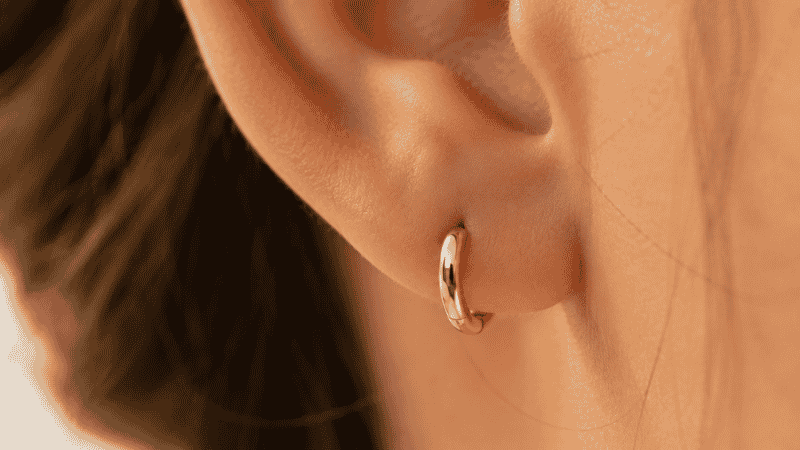
A hoop is a circular or oval ring that passes through the ear piercing and curves around to complete the circle at the back. The defining characteristic is the continuous loop — it’s the same piece of metal going in and coming back to meet itself.
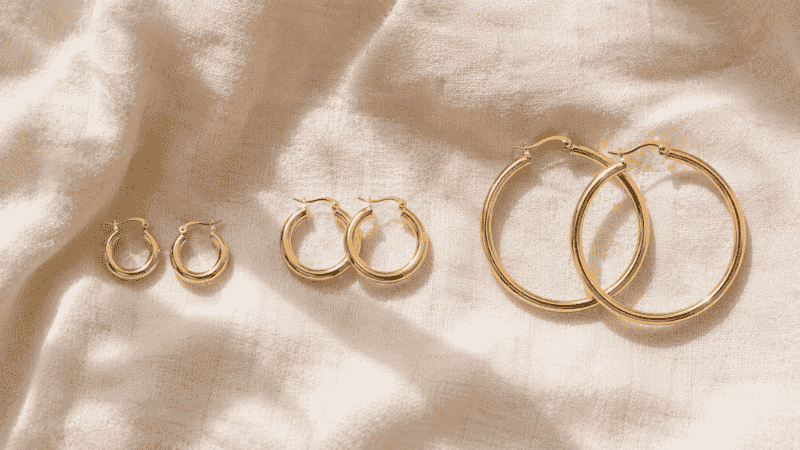
Hoops vary enormously in diameter, width, and weight, which is why “hoop earrings” as a category covers everything from delicate 12mm rings that sit close to the earlobe to dramatic 60mm circles that graze the shoulder.
Understanding hoop diameter: This is the number that changes everything about how a hoop looks and feels.
12–16mm reads as quiet and refined — close enough to the ear to look almost like a stud with movement. This is the range most often described as “everyday hoops.”
20–30mm has clear presence without being large — visible from across a table, appropriate in most contexts.
40mm and above becomes a statement. Beautiful and intentional, but situational — it’s not the hoop you wear to a quiet Monday meeting.
Hoop thickness matters too. A very thin hoop (under 1mm) looks delicate and minimal. A thicker hoop (2–3mm) looks more substantial and tends to hold its shape better.
Who hoops suit best: Hoops are particularly flattering for oval, heart-shaped, and longer face shapes, where the circular movement adds width and softness. For rounder face shapes, smaller hoops (under 20mm) or huggies tend to be more flattering than very large circles.
Huggie Earrings: The Earring That Changed Everything
Huggies are the single most significant earring development of the past decade — and if you’re not familiar with them, they’re worth understanding.
A huggie is a very small hoop designed to fit snugly around the earlobe rather than swinging freely. The diameter is small enough — typically 10 to 16mm — that the hoop lies almost flat against the ear rather than hanging away from it. The result is something that looks like a thick, close-fitting ring of metal encircling the lobe.
What makes huggies distinct from regular small hoops is the closure mechanism — most huggies use a hinged snap closure (a small click closure at the bottom of the ring), which keeps them sitting flush rather than shifting position throughout the day.
Why they became so popular: Huggies sit in an ideal middle ground. They have more visual interest than a stud because you can see the full circle of metal. They have more wearability than a larger hoop because they stay in place, don’t catch on hair or clothing, and don’t feel heavy. For people who love the look of hoops but find larger ones impractical for daily life, huggies solve the problem.
What they suit: Huggies are extremely versatile. They work with hair up and down, sit well in multiple piercings, and transition from casual to professional to evening with equal ease. For a second or cartilage piercing, a 8–10mm huggie is often the most comfortable and practical option.
Huggie materials: Because huggies sit against the skin consistently, the metal matters. 14k gold, gold vermeil, titanium, and surgical-grade stainless steel are all appropriate. Standard gold-plated brass huggies will wear faster at the hinge point than at any other part of the piece.
Drop Earrings: Fixed Pendants with Elegant Presence
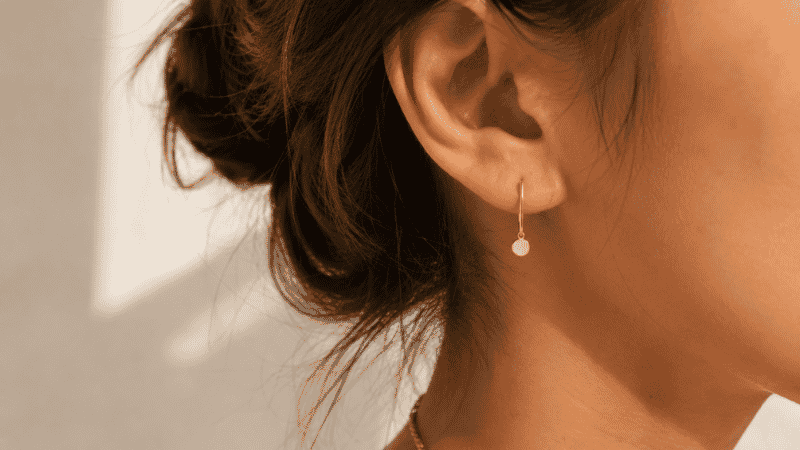
A drop earring has a decorative element that hangs below the earlobe from a post or hook, but doesn’t move freely — the pendant is fixed in position. The distinction from dangle earrings is the movement: a drop holds its shape, a dangle swings.
Drop earrings range from very subtle — a small oval shape hanging just 5–8mm below the lobe — to more substantial pendants that hang 15–25mm below. At the subtle end, drops look almost like elongated studs. At the longer end, they create clear presence without the dramatic movement of dangles.
What they suit: Drop earrings add length to the face, which makes them particularly flattering for rounder or wider face shapes where a bit of vertical movement is welcome. They’re also very comfortable for all-day wear because the fixed pendant doesn’t shift or swing against the neck.
Best occasions: Drop earrings work across a wide range of contexts — they’re refined enough for professional settings when kept small and understated, and versatile enough for casual and evening wear when scaled up.
Dangle Earrings: Movement and Drama
Dangle earrings are similar to drops in that they hang below the lobe, but the key difference is that they swing freely — you move, they move with you, catching light and creating visual rhythm.
This movement is what makes dangling earrings feel celebratory and expressive. At a dinner, in the right light, a pair of small gold dangles creates an effect that no fixed earring can match. The trade-off is that this same movement means they’re not always appropriate or comfortable for every context — very long dangles can be impractical for active days, and they catch on things in ways that fixed drops don’t.
The length variable: Dangles vary enormously in drop length. Short dangles (under 2cm from the lobe) look refined and work for most contexts. Medium dangles (2–4cm) have clear presence and suit more relaxed or social settings. Long dangles (4cm and above) are statement pieces — they look extraordinary and require the right outfit and occasion to land well.
Ear Climbers and Crawlers: Modern Architecture
Ear climbers are earrings designed to follow the curve of the ear, appearing to “climb” up the outer edge of the lobe and sometimes into the lower part of the helix. They’re worn through a single lobe piercing but extend upward, creating the visual impression of multiple piercings or a continuous line of jewelry along the ear.
The effect is genuinely distinctive — it looks complex and architectural while requiring only one piercing. Most climbers have a curved back bar that sits behind the ear to hold the visible portion in the correct upward position.
What to know before buying: Climbers work best for ears with a certain shape and size — what looks perfect on one person can be awkward on another depending on the ear’s curvature. If you’re interested in a specific climber, seeing it in person or reading detailed reviews about how it sits on different ear shapes is worth the extra time.
Threader Earrings: Delicate and Minimal
Threader earrings are long, very thin chains with a decorative element at the end, designed to thread through the ear piercing hole and hang on both sides — one end visible at the front, the other hanging down behind. The result looks like a delicate chain simply passing through the ear.
They’re among the most minimal and delicate earring styles available, and they’re adjustable — you can pull more or less of the chain through to change the length of the visible drop. The trade-off is that they require a slightly larger gauge piercing than standard post earrings to thread through comfortably, and they’re not a practical choice for very active days because they can slip.
Ear Cuffs: No Piercing Required
Ear cuffs are pieces of jewelry designed to clip or clamp onto the outer edge of the ear — no piercing required. They range from very simple thin bands that grip the helix to more elaborate sculptural pieces that wrap around the outer ear.
For people who aren’t pierced, ear cuffs offer a way to wear statement ear jewelry without the commitment. For people with piercings, they can be added to an ear stack to fill out a look without needing additional piercings.
The comfort variable: Ear cuffs that are too tight cause discomfort; ones that are too loose fall off. Finding the right tension takes a little adjusting. Most metal cuffs can be gently bent to fit better.
Chandelier Earrings: The Statement Choice
Chandelier earrings are large, elaborate drop or dangle earrings with multiple tiers that spread outward as they drop — resembling the shape of a chandelier. They’re purely statement pieces: beautiful, dramatic, and occasion-specific.
For everyday wear, they’re impractical. For a wedding, a formal event, or a night where the earrings are genuinely intended to be the centerpiece of the look, they’re extraordinary.
Earrings for Sensitive Ears: What Actually Makes a Difference
If you experience reactions to earrings — redness, itching, swelling, or soreness — the metal is almost always the issue. Nickel is the most common earring allergen, present in many brass alloys and some gold alloys, particularly lower-karat gold and white gold. The solution isn’t to stop wearing earrings; it’s to change the metal.
Safe options for sensitive ears:
Implant-grade titanium is the gold standard for sensitive ears — completely hypoallergenic, lightweight, and available in anodized colors as well as natural silver-gray.
Solid 14k or 18k gold is safe for most sensitivities. The higher the karat, the less alloy present and the lower the reaction risk. 10k gold contains more alloy and is more likely to cause reactions.
Niobium is similar to titanium in hypoallergenic properties — less widely available but worth seeking for severe sensitivities.
Sterling silver (925) is generally safe but can cause reactions in some people, particularly in post form where it contacts the piercing channel directly.
What to avoid: Anything described only as “alloy,” “metal,” or “gold tone” without specifying the composition. These almost always contain nickel.
→ For the complete hypoallergenic jewelry guide: [Jewelry for Sensitive Skin: The Complete Guide]
Which Type of Earring Should You Start With?
If you’re building an earring collection from scratch or trying to figure out where to focus:
A quality pair of small gold studs (6–8mm) is the single most useful earring investment. They work in every context, they’re always appropriate, and they form the base layer for any ear stack you build later.
A pair of small huggies (12–14mm) in gold or silver is the highest-return second purchase. They add presence and movement that studs don’t have, while staying practical enough for daily wear.
A pair of medium hoops (20–25mm) gives you a step up in presence for casual and social occasions — the earring you reach for when you want something that’s clearly “jewelry” without being a production.
Everything beyond these three is expansion rather than foundation — adding personality, occasion-specific pieces, or styles that suit specific aesthetics.
FAQ
What are huggie earrings? Huggies are small hoops designed to sit snugly against the earlobe rather than swinging freely. They’re typically 10 to 16mm in diameter with a hinged snap closure that keeps them in place. They combine the look of a hoop with the wearability of a stud — which is why they’ve become one of the most popular everyday earring styles.
What is the difference between drop and dangle earrings? Drop earrings have a fixed pendant that hangs below the lobe in a set position — it doesn’t move when you move. Dangle earrings swing freely, creating movement and catching light. Drops are generally more appropriate for professional settings; dangles have more presence at social and evening occasions.
What earrings are best for sensitive ears? Implant-grade titanium, solid 14k or 18k gold, and niobium are the safest options for sensitive ears. The post and backing material — the part that contacts the piercing — matters more than the visible decorative portion. Avoid pieces described as “alloy” or “gold tone” without a specified metal content, as these usually contain nickel.
What size hoop earring is best for everyday wear? 12 to 20mm diameter is the most universally wearable range for everyday hoops — close enough to the ear to be refined, large enough to be visible and clearly present. Below 12mm starts to look more like a small ring than a hoop. Above 30mm becomes more situational.
Are ear cuffs comfortable for all-day wear? A well-fitted ear cuff — one with the right tension for your ear — is comfortable for all-day wear. The key is finding the right size and adjusting the tension so it holds without gripping. Cuffs that are too tight cause discomfort over hours; ones too loose fall off. Most metal cuffs can be gently bent to improve the fit.
Earring vocabulary stops being confusing the moment you understand what each term actually describes. A huggie is just a small hoop that hugs. A climber climbs. A threader threads. Once you can picture how each type sits on the ear, choosing becomes a matter of which effect you want rather than what the words mean.
The best earrings aren’t necessarily the most dramatic ones — they’re the ones that feel right for how you actually move through your day.
Related reading:
- How to Style Jewelry: The Complete Guide → [internal link]
- Jewelry for Sensitive Skin: The Complete Hypoallergenic Guide → [internal link]
- How to Layer Necklaces: The Effortless Formula → [internal link]
Sources:
- Impuria Ear Piercing Jewelry — The Complete Guide: Earrings for Women
- American Academy of Dermatology — Nickel Allergy: How to Avoid Exposure and Reduce Symptoms
- Healthline / Medical review — Nickel Allergy: Symptoms, Causes, and Treatment (medically reviewed content)
- Gabriel & Co. — How to Stack Rings (December 2025)