
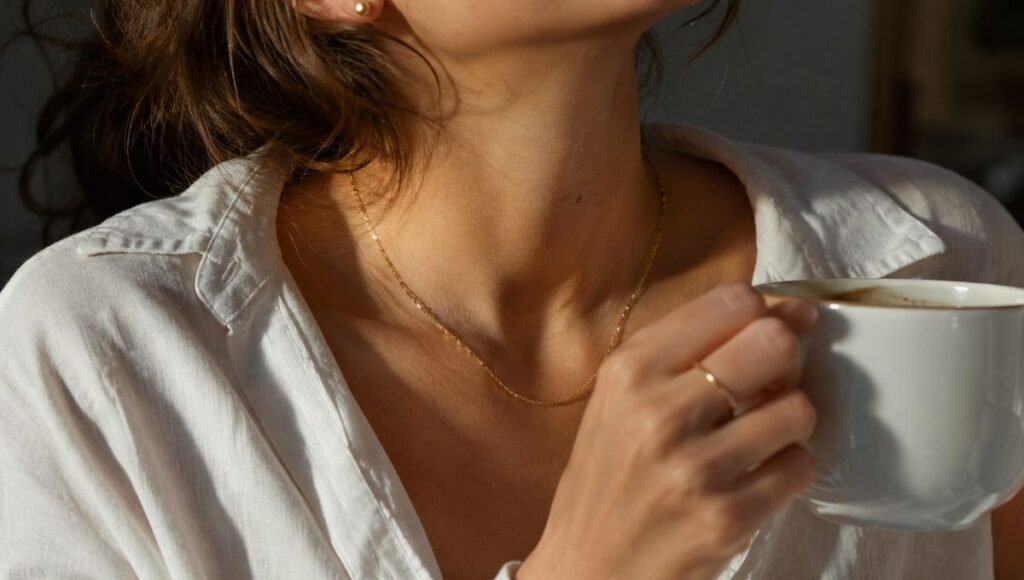
There’s a difference between jewelry you own and jewelry you wear. Most people have more of the former than they realize — pieces acquired over years, sitting in boxes or on trays, occasionally considered and put back. Beautiful in the abstract. Unworn in practice.
Everyday jewelry is the opposite of that. It’s the category of pieces that make it onto your body without conscious decision-making, that feel incomplete to leave behind, that you’d notice the absence of before you noticed their presence. A thin chain you’ve worn so consistently it feels like part of you. Small earrings you reach for without looking. A ring that’s been on your finger for so long you’ve stopped seeing it.
Building an everyday jewelry collection isn’t about buying more pieces. It’s about understanding what makes a piece genuinely wearable for daily life — and then choosing deliberately rather than accumulating by accident. This guide covers all of it: what everyday jewelry actually means, which pieces form a functional foundation, how to choose materials that hold up to daily wear, how to build a collection incrementally, and how to wear it all with intention.
Key Takeaways
- Everyday jewelry is defined by wearability — pieces that work with most outfits, in most contexts, without requiring thought or adjustment
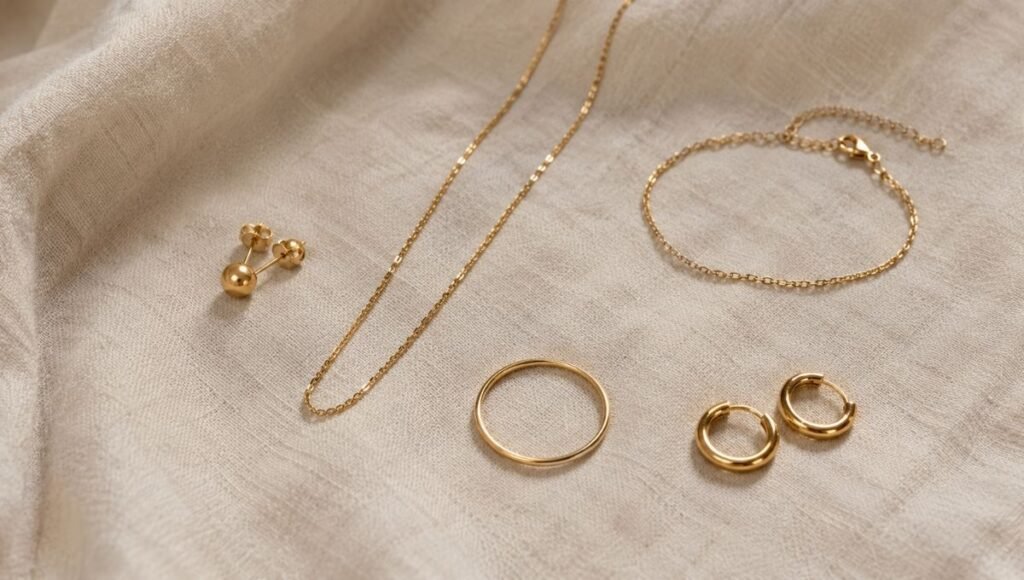
- A functional everyday jewelry foundation needs only five pieces: small studs, a delicate chain necklace, a simple ring, a slim bracelet, and a pair of small hoops
- Material quality matters more for everyday pieces than for occasional wear — pieces worn daily experience more friction, sweat, and contact, which accelerates wear on lower-quality materials
- Gold filled, gold vermeil over sterling silver, and solid 14k gold are the most practical materials for everyday pieces at accessible price points
- The best everyday jewelry collection is built incrementally — one piece at a time, around what you actually wear — not purchased as a complete set
What Makes Jewelry “Everyday”
The word gets used loosely, but everyday jewelry has a specific set of qualities that separates it from other categories.
It works with most things you wear. An everyday piece shouldn’t require a specific outfit to make sense. A delicate gold chain works with a linen shirt, a silk blouse, a cashmere sweater, and a white t-shirt — it doesn’t take a position on what you’re wearing, so it fits everything. A statement piece, by contrast, is situational — it makes a look when the context is right, and overwhelms when it isn’t.
It’s comfortable enough to forget. This is perhaps the most underrated quality. Everyday jewelry is worn for hours at a time, through work and movement and life. Pieces that require adjustment, that catch on hair or clothing, that feel heavy by midday, or that you’re constantly aware of, will be abandoned regardless of how beautiful they are. The pieces that stay are the ones you stop noticing.
It’s durable enough for consistent wear. Daily wear means daily friction, daily sweat exposure, daily contact with lotion and perfume and soap. A piece that can’t handle this honestly isn’t an everyday piece — it’s an occasional piece that you’re wearing every day at the cost of its longevity.
It suits multiple occasions. The genuinely versatile everyday piece works at your desk, at a coffee shop, at a casual dinner, and in a professional meeting. It doesn’t need to be removed before any of these contexts and doesn’t feel out of place in any of them.
The Five-Piece Everyday Foundation
You don’t need a large collection to have a complete everyday jewelry wardrobe. These five categories cover the full range of where jewelry sits on the body and give you enough variety to dress up or down without needing to add anything.
One Pair of Small Stud Earrings
Studs are the most foundational everyday earring — present enough to be noticed, small enough to be forgotten. The ideal everyday stud sits between 5mm and 8mm: visible in conversation, invisible in photographs, appropriate in every setting from the gym to the boardroom.
The material matters more for studs than almost any other piece because the post makes direct contact with your piercing. Solid 14k or 18k gold, implant-grade titanium, and niobium are the safest options for daily wear. Gold vermeil and gold-filled studs work well if the post itself is made from a hypoallergenic material.
→ For a complete breakdown of earring types and which suits daily wear: [Types of Earrings: A Complete Guide to Every Style] → If you have sensitive ears: [Earrings for Sensitive Ears: What Actually Works]
One Delicate Chain Necklace
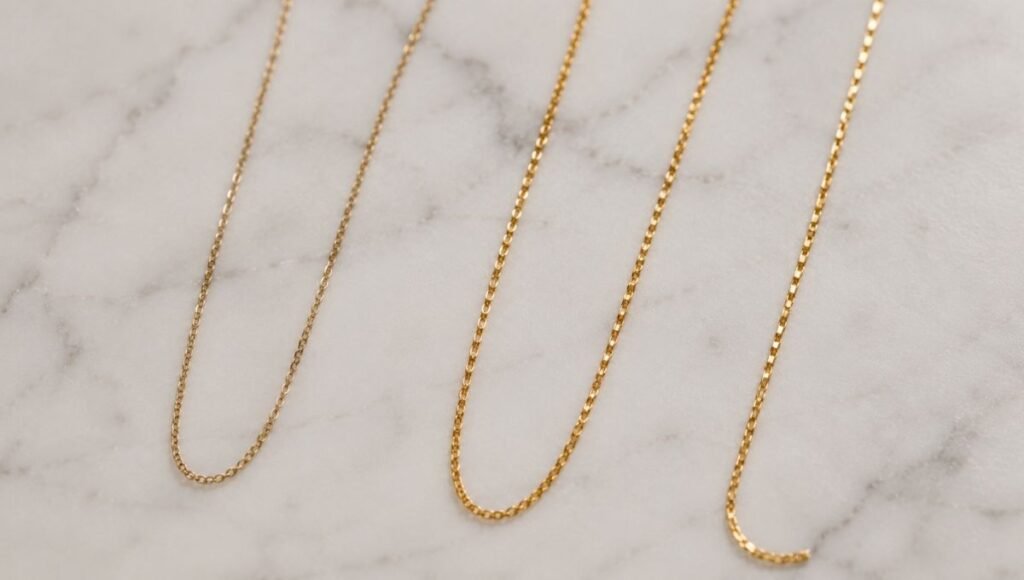
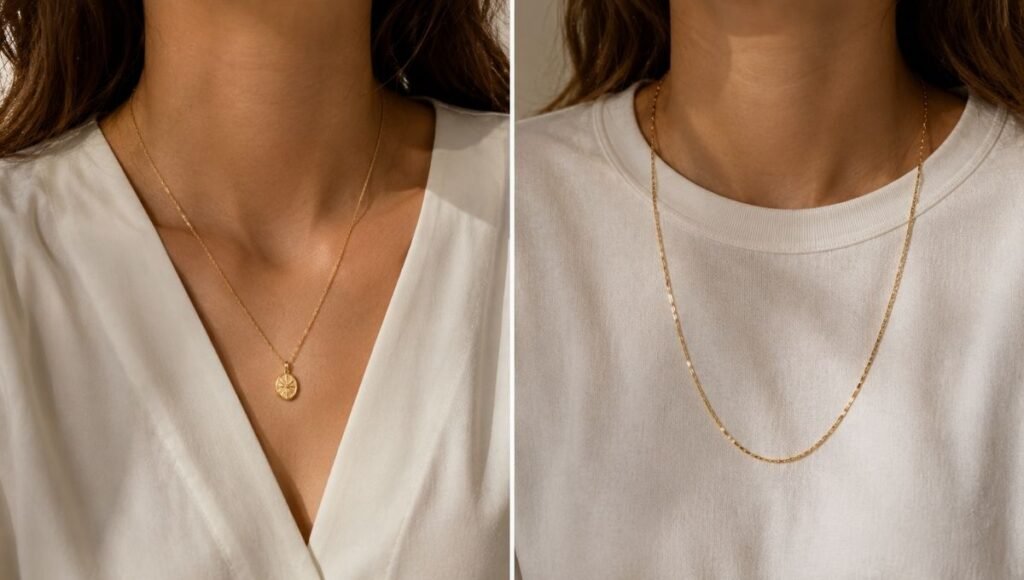
A fine chain necklace — 14 to 18 inches, 1 to 1.5mm width — is the piece most likely to become genuinely permanent in your wardrobe. It works alone as a quiet, elegant presence, or as the base layer of a more elaborate necklace stack on days when you want more.
Length matters for wearability. A 16-inch chain sits at the collarbone and works with most open necklines. An 18-inch chain falls just below the collarbone and suits a wider range of necklines including crew necks. If you’re unsure, 18 inches is the more versatile starting point.
For a daily necklace, gold-filled is the most practical material at an accessible price point — it handles daily moisture and friction better than standard gold plating or even gold vermeil. Solid 14k gold is the investment choice for a piece you intend to wear without ever taking off.
One Simple Ring
A thin band ring — 1 to 2mm width, plain or with minimal texture — changes how a hand looks without drawing attention to itself. Worn on any finger that feels natural, it reads as finished and considered without announcing itself as jewelry.
For a ring worn every single day, material quality has the highest impact. Rings experience more friction than any other piece — against surfaces, against other rings, against everything you touch. Standard gold plating wears through on rings faster than on any other jewelry category. Gold-filled or solid gold is genuinely worth the investment for a ring you intend to wear indefinitely.
→ For guidance on which finger to wear a ring on and how to build a ring look: [How to Wear Rings: A Complete Guide]
One Small Hoop or Huggie
The difference between studs and small hoops is movement and presence. Hoops catch light when you turn your head. They’re visible in a way that studs aren’t, which gives them slightly more styling presence while remaining fully wearable for daily life.
A huggie — a small hoop designed to sit flush against the earlobe — is the most practical everyday hoop option. At 10 to 16mm in diameter with a hinged closure, it stays in place throughout the day without the shifting and catching that larger hoops can cause. It reads as clearly more than a stud without crossing into statement territory.
For those without a second piercing, a pair of small hoops (12 to 18mm) on the lobe is equally wearable and has the advantage of being the most universally recognized earring style.
One Slim Bracelet
A single chain bracelet or slim bangle — the kind that doesn’t slide dramatically or clank against things — adds a dimension to a look that earrings and necklaces can’t quite achieve. It moves with you in a way that’s visible from across a table, creates a small moment of polish at the wrist that feels finished without feeling dressed up.
This is the most optional of the five — not everyone reaches for wrist jewelry instinctively — but for those who do, one quality piece in your metal of choice does more than a pile of less considered options.
→ For bracelet layering when you’re ready to build beyond one piece: [How to Layer Bracelets: The Simple Formula]
Choosing Materials for Daily Wear
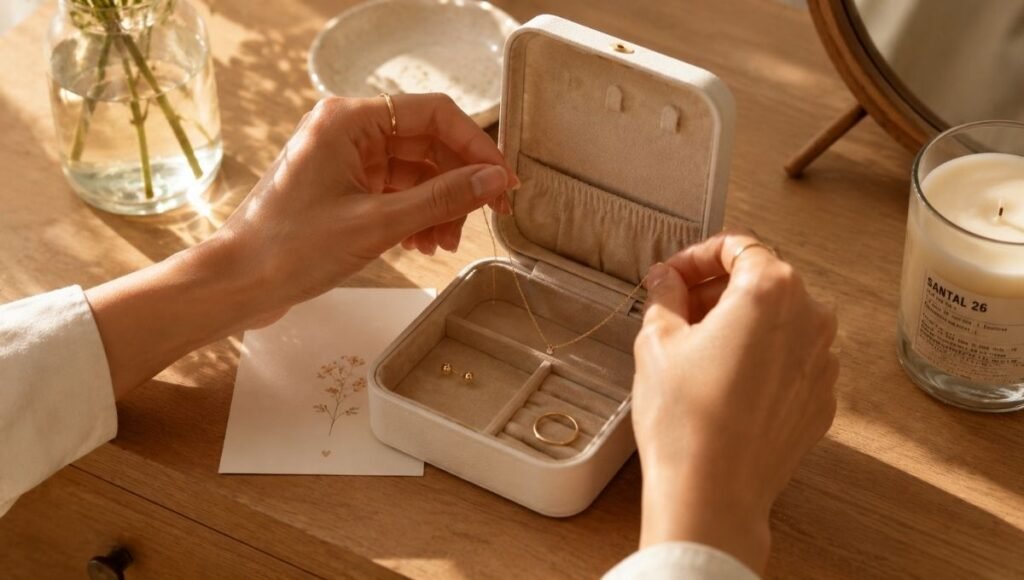
Material choice is more consequential for everyday jewelry than for any other category. A piece worn occasionally can be plated, fragile, or low-quality and still look fine for years. A piece worn every day needs to hold up to real conditions.
Gold-filled is the most durable non-solid-gold option for everyday wear. Its gold layer — legally required to be at least 5% of total weight — is bonded through heat and pressure rather than electroplating, which means it doesn’t peel or separate with wear. For rings and bracelets that experience daily friction, gold-filled outperforms every other accessible option.
Gold vermeil (gold over sterling silver, at least 2.5 microns thick) is the most refined-feeling option at accessible prices. The sterling silver base makes it genuinely hypoallergenic for most people, and the gold tone is rich and consistent. It’s excellent for necklaces and earrings that experience less friction than rings and bracelets.
Solid 14k gold is the investment choice for pieces you intend to wear without removing. It handles daily wear indefinitely — friction, moisture, chemicals — without degrading. Worth the premium for one or two pieces that truly become part of your daily life.
Implant-grade titanium is the best choice for earring posts if you have any history of metal sensitivity. It’s what medical implants are made of, which means your body essentially doesn’t register it as foreign.
→ For the complete materials breakdown: [The Complete Jewelry Metals Guide: What Every Material Actually Means]
Everyday Jewelry and Necklines: The One Styling Rule Worth Knowing
The relationship between your necklace and your neckline is the single most impactful styling principle for daily dressing — and the one most people intuitively know but rarely consciously apply.
A V-neck creates a natural downward line that calls for a necklace that follows it — something at 18 to 22 inches that falls with the opening. A crew neck or round neck covers the collarbone, which means anything shorter than 18 inches will disappear under the fabric. For crew necks, 20 to 24 inches lets the necklace sit on top of the garment rather than being swallowed by it.
For everyday dressing, this usually means having two necklaces at different lengths — one for open necklines and one for closed ones — rather than one necklace that you wear regardless of the outfit. Or choosing the 18-inch length as the most universal compromise.
Building Your Collection Incrementally
The most common mistake in building a jewelry collection is trying to assemble it all at once. A set purchased together looks coordinated but often feels generic — pieces chosen to match each other rather than pieces chosen to suit you.
The collections that feel most personal develop over time. One piece, worn consistently long enough to understand what it’s missing. A second piece added to complement the first. A third that fills a gap you couldn’t have articulated before you found it.
This approach takes longer but produces something the set approach never does: a collection where every piece was chosen because it specifically fit your life, not because it matched the others in a display case.
The practical starting sequence:
Start with the earring that requires the least thought — small studs, in your metal preference. Wear them for a few weeks and notice what’s missing. Most people find they want a necklace next — something to complete the picture at the collarbone. Add that, and again observe. The ring or bracelet usually comes third, filling out the picture in a way that feels specific rather than prescribed.
When Everyday Jewelry Needs a Break
Even genuinely wearable everyday pieces benefit from occasional rest — and knowing when to take them off extends their life significantly.
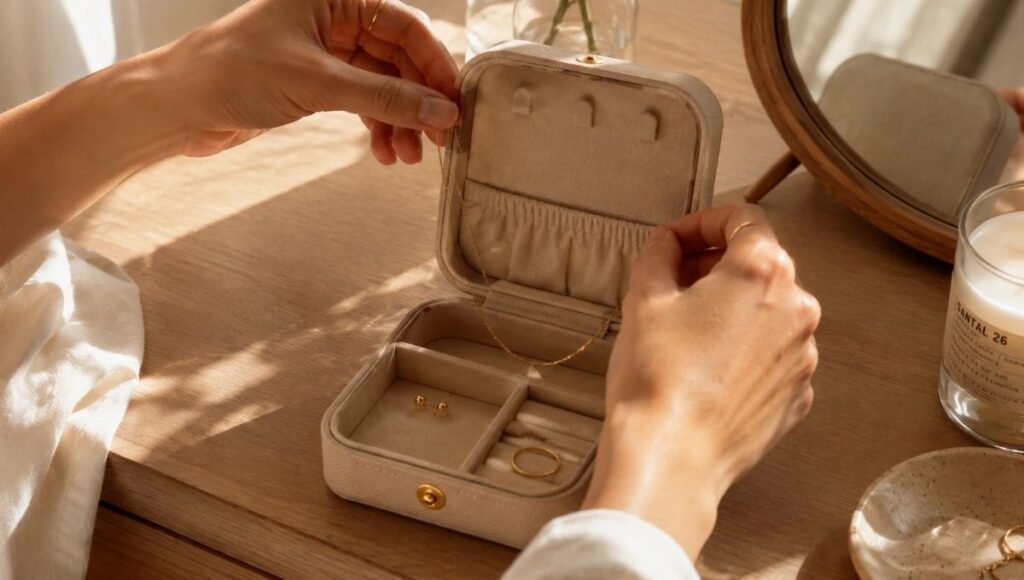
Before swimming or extended water exposure, particularly in chlorinated pools or saltwater. Before applying heavy lotions, sunscreen, or perfume directly at the contact point. Before sleeping, especially for necklaces that can tangle and weaken at chain links overnight. Before any activity that would subject the piece to unusual friction or impact.
None of these require vigilance — they’re simple habits that become automatic with time and prevent the premature wear that makes people feel their jewelry “doesn’t last.”
Everyday Jewelry as a Gift
Everyday jewelry is one of the most reliably received gift categories precisely because it’s personal without being risky. A statement piece as a gift reflects the giver’s taste as much as the recipient’s, and if the style doesn’t fit, the piece is beautiful but unwearable. An everyday piece — a delicate chain, small studs, a simple ring — in the recipient’s metal preference (observable from what they already wear) integrates naturally into what they have rather than requiring them to build around something new.
The most useful observation before choosing: what metal does she already wear most consistently? Gold or silver preference is usually obvious from existing jewelry, and matching it is the single most reliable way to ensure a gift gets worn.
→ For jewelry gift guidance by relationship and occasion: [Jewelry Gifts for Mom That She’ll Actually Wear]
FAQ
What is considered everyday jewelry? Everyday jewelry is defined by wearability rather than style or price. It’s jewelry that works with most of what you wear, is comfortable enough to forget about throughout the day, and durable enough to handle consistent wear. Typically: small stud earrings, a delicate chain necklace, a simple ring, and a slim bracelet or small hoops.
What jewelry can you wear every day without it tarnishing? Solid gold (14k or 18k), gold-filled, and implant-grade titanium are the most tarnish-resistant options for daily wear. Gold vermeil holds up well with proper care. Standard gold plating over brass is the least suitable for daily wear — the base metal tarnishes once the plating wears through.
How many pieces of jewelry should you wear every day? Two to four pieces is the most universally flattering range for everyday wear — enough to look considered without requiring deliberate effort. Most people find a consistent combination of two or three pieces that becomes their default: usually earrings plus a necklace, or earrings plus a ring.
What is the most versatile everyday jewelry piece? A delicate chain necklace at 16 to 18 inches is the single most versatile everyday piece — it works with virtually any neckline, suits any occasion from casual to professional, and forms the foundation of layered looks when you want more. Small stud earrings are a close second.
Is it okay to wear the same jewelry every day? Yes — many people wear the same one to three pieces continuously for years. The key is choosing pieces made from materials that handle daily wear: solid gold, gold-filled, or titanium. The more contact and friction a piece experiences, the more material quality matters for long-term wearability.
Everyday jewelry isn’t about having the most pieces or the finest ones. It’s about having the right ones — chosen for how they fit into your actual life rather than an idealized version of it.
The collection that serves you best is the one you reach for without thinking, wear without adjusting, and notice only when it’s missing. Building that takes time, but it starts with one piece worn consistently enough to know what comes next.
Complete Everyday Jewelry Guide
Every section of this guide links to a deeper article. If something here prompted a question, the full answer is in one of these:
- [Types of Earrings: A Complete Guide to Every Style] → studs, hoops, huggies, drops, and which suits your daily life
- [Earrings for Sensitive Ears: What Actually Works] → materials, what hypoallergenic really means, and what to look for
- [How to Wear Rings: A Complete Guide] → which finger, how many, and how to build a ring look
- [How to Untangle a Necklace Without Breaking It] → the five methods that work, ranked by severity
- [How to Layer Bracelets: The Simple Formula] → anchor pieces, contrast, and proportion for a wrist stack
- [The Complete Jewelry Metals Guide] → gold-filled vs vermeil vs solid gold vs plated, explained clearly
Sources:
- LisaJewelryUS — The Five Jewelry Pieces Women Wear Every Day (June 2026)
- Blue Nile — Building An Everyday Jewelry Wardrobe (November 2025)
- Bondeye Jewelry — 10 Everyday Jewelry Essentials Every Woman Needs (July 2025)
- Rarete Jewelry — What Are the Top 7 Jewelry Essentials for Every Woman? (April 2026)
- Winston’s Crown Jewelers — Jewelry Essentials: Building Your Collection for Daily Wear (June 2024)