
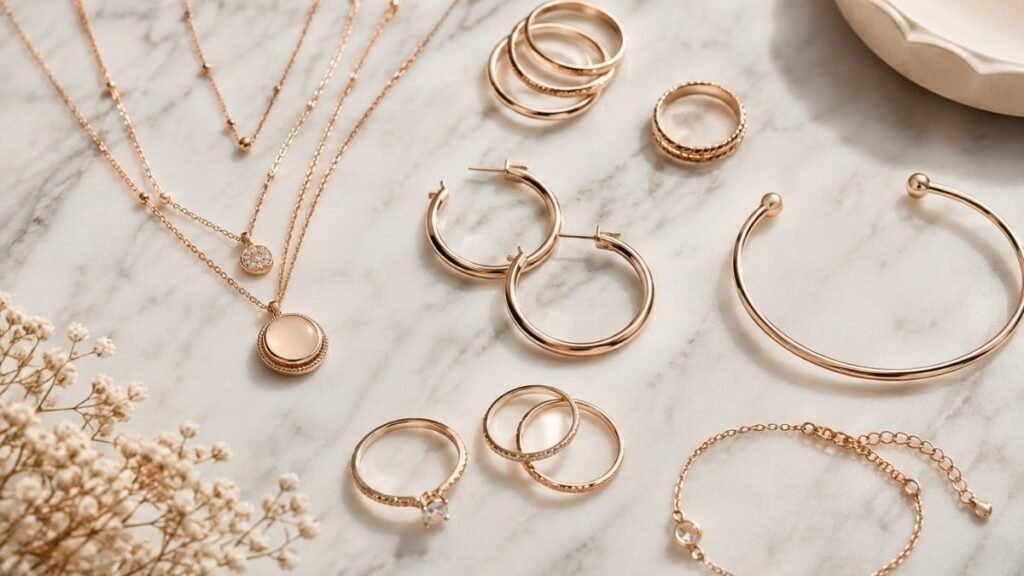
Shopping for rose gold jewelry can feel surprisingly confusing. Many pieces look almost identical online, yet the differences in quality, durability, and value can be significant. It’s also natural to wonder whether rose gold suits your skin tone or if it’s still a style worth investing in.
A little knowledge before you buy makes all the difference. The right piece can become something you wear every day, while the wrong one may lose its finish far sooner than expected.
This guide explains what rose gold is, how to recognize quality, choose pieces that suit your style, and care for them so they stay beautiful for years.
Overview / Quick Answer
Rose gold jewelry is made by alloying pure gold with copper and a small amount of silver, which gives it that signature warm, pink-toned color. It’s available across the full quality spectrum — solid gold, gold vermeil, gold-filled, and gold-plated — so the color alone tells you very little about durability or value.
A few essentials before you shop:
- What it’s made of: Gold + copper + a touch of silver
- Who it flatters: A wide range of skin tones, especially warm, olive, and neutral undertones
- Best for: Everyday styling, layering, and gifts with a bit of sentimental weight
- What actually matters: The construction (solid, vermeil, filled, or plated) affects durability far more than the color itself
If you’re choosing rose gold for its softness and versatility, you’re on the right track — the real decision now is which construction fits your budget and how you plan to wear it.
What Is Rose Gold Jewelry?
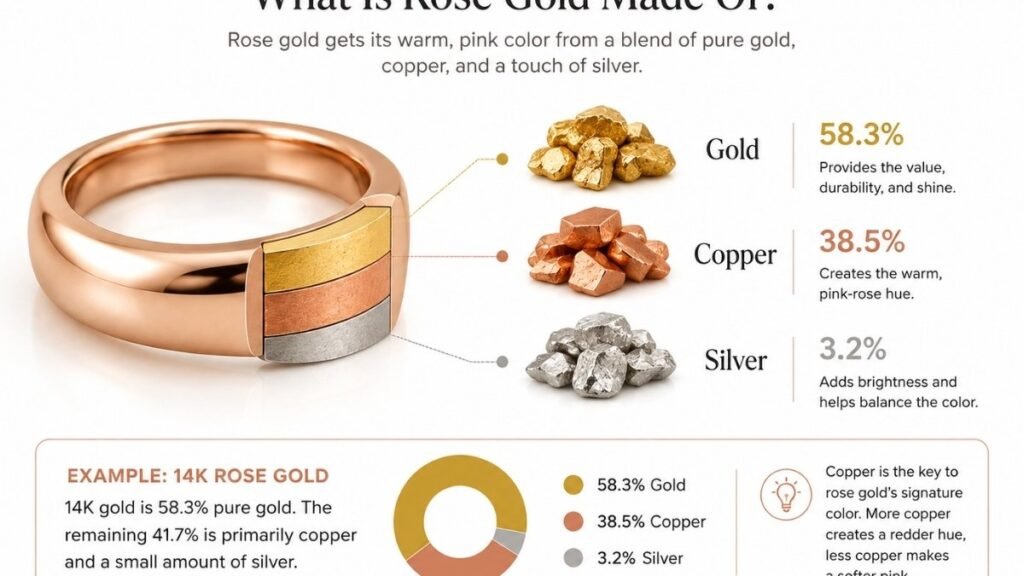
Rose gold is genuine gold that’s been alloyed with copper — and sometimes a touch of silver — to create its warm, pink-toned color. It’s not a coating or a trend invention; it’s a compositional variation of gold itself, the same way white gold gets its silvery tone from palladium or nickel.
Why copper changes the color of gold
Pure gold is naturally yellow. Adding copper shifts that color toward pink and red tones, and the more copper in the alloy, the deeper and more coppery the shade becomes. Brands that use a higher copper ratio produce a bolder, almost red-toned rose gold, while brands with less copper (and a touch more silver) produce a softer, more delicate pink.
Is rose gold real gold?
Yes — as long as it’s marked with a karat stamp (like 10K, 14K, or 18K), it’s genuine gold alloyed for color, not a fake or synthetic metal. The karat number simply tells you how much pure gold is in the mix. If you’re ever unsure whether a piece is genuine, it’s worth learning how to tell if jewelry is real gold before you buy, since hallmarks and simple at-home checks can save you from an expensive mistake.
Rose gold isn’t a modern fashion invention, either — the color has roots in 19th-century Russian jewelry-making and was popularized further by luxury houses like Cartier in the early 20th century. It’s a genuinely traditional metal choice that happens to look right at home in a 2026 outfit.
Rose Gold Composition by Karat
| Karat | Approx. Gold Content | Typical Color |
|---|---|---|
| 10K | 41.7% gold | More muted pink, higher durability |
| 14K | 58.3% gold | Balanced pink tone, popular for everyday wear |
| 18K | 75% gold | Richer, warmer pink, softer metal |
Rose Gold vs. Yellow Gold vs. White Gold
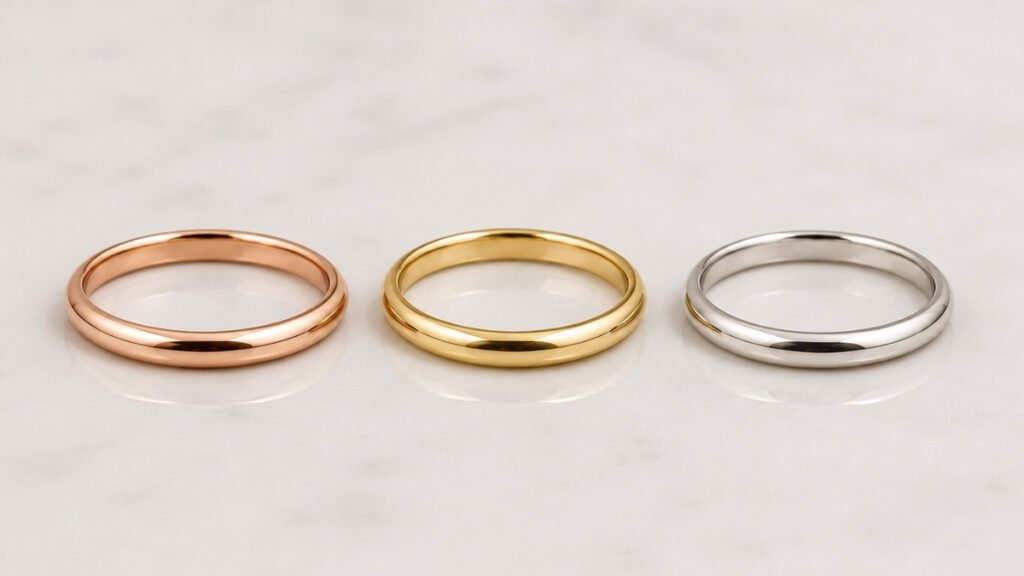
The three gold colors differ in alloy composition, appearance, and how they wear over time — but they’re all built from the same pure gold base. Choosing between them usually comes down to skin tone preference, maintenance tolerance, and the look you’re going for rather than one being objectively “better.”
Rose Gold vs. Yellow Gold vs. White Gold
| Rose Gold | Yellow Gold | White Gold | |
|---|---|---|---|
| Alloy additions | Copper + silver | Copper + silver + zinc | Palladium or nickel |
| Appearance | Warm, pink-toned | Classic warm yellow | Cool, silvery-white |
| Durability | Slightly harder (copper strengthens it) | Moderate | Moderate, but plating (rhodium) wears off |
| Maintenance | Low | Low | Requires occasional rhodium replating |
| Typical price | Similar to yellow gold at same karat | Baseline | Often similar, plus replating cost over time |
| Best for | Warm/neutral skin tones, romantic aesthetics | Classic, traditional looks | Cool skin tones, modern minimalist looks |
Appearance differences
Rose gold reads warm and romantic, yellow gold reads classic and traditional, and white gold reads modern and cool. None of these are “more precious” than the others — the color is purely about alloy composition, not gold purity, so the difference between 14K and 18K gold matters more for durability and value than which color you choose.
Which gold color fits your lifestyle?
If you tend to layer jewelry daily or want something that photographs beautifully in warm lighting, rose gold tends to be the most forgiving. It’s also worth noting why many jewelry collections end up mixing all three colors rather than committing to one — different metals suit different pieces, and a mixed collection often looks more curated than an all-matching one.
Rose Gold Jewelry Materials Explained
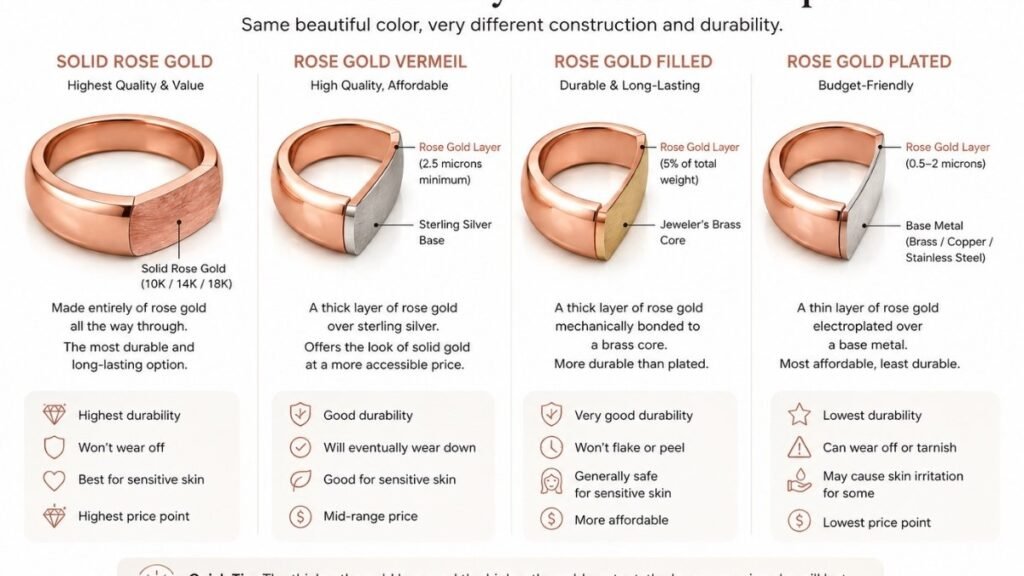
Pieces that look almost identical online can vary greatly in durability, value, and how well they hold up to everyday wear. Knowing the difference between solid gold, vermeil, gold-filled, and gold-plated jewelry can help you choose a piece you’ll still love months or even years from now.
Solid rose gold vs. vermeil
Solid rose gold is rose gold alloy all the way through — durable, hypoallergenic in higher karats, and the most expensive option. Rose gold vermeil is sterling silver coated with a regulated minimum thickness of rose gold, offering a similar look at a fraction of the price, with somewhat less longevity.
Gold filled vs. plated
Rose gold-filled jewelry mechanically bonds a thick layer of rose gold to a base metal, giving it considerably better tarnish resistance than plated jewelry, which uses an extremely thin gold layer over a base metal and tends to fade the fastest.
Solid Rose Gold vs. Rose Gold Vermeil vs. Rose Gold Filled vs. Rose Gold Plated
| Solid Rose Gold | Rose Gold Vermeil | Rose Gold Filled | Rose Gold Plated | |
|---|---|---|---|---|
| Base | All gold alloy | Sterling silver | Base metal | Base metal |
| Gold layer | N/A (solid) | 2.5+ microns | Thick, bonded | Often under 0.5 microns |
| Durability | Excellent | Good | Very good | Fair |
| Price | $$$$ | $$ | $$ | $ |
| Best for | Investment, daily wear | Everyday wear, gifting | Everyday wear, water exposure | Occasional wear |
Why rose gold shades vary between brands
Because the exact copper-to-gold-to-silver ratio isn’t standardized across brands, one 14K rose gold ring can look noticeably pinker or more copper-toned than another at the exact same karat. This is completely normal — it’s a formulation choice, not a quality defect.
Pieces that look nearly identical in a product photo can age completely differently, which is exactly why two rose gold rings from different brands — both described as “14K rose gold vermeil” — can end up looking dramatically different after a year of daily wear if their gold thickness isn’t actually comparable.
What Skin Tone Looks Best with Rose Gold?
While it’s often associated with fair skin, it actually complements a wide variety of skin tones. Warm and olive undertones usually bring out its rich, rosy color, while softer shades of rose gold can also look beautiful on neutral and cool undertones.
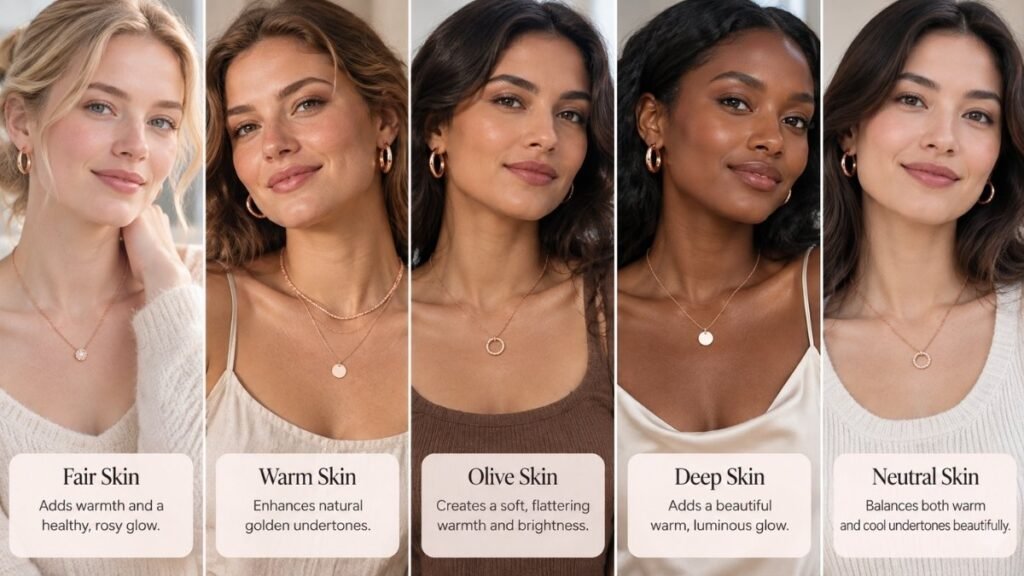
Rose Gold Skin Tone Matching Guide
| Undertone | How Rose Gold Reads | Styling Note |
|---|---|---|
| Warm | Beautifully harmonious | Rose gold is often the most flattering metal choice |
| Olive | Rich and complementary | Works especially well with deeper rose tones |
| Neutral | Versatile, easy to wear | Pairs well with almost any rose gold shade |
| Cool | Can work with the right shade | Lighter, more pink-toned rose gold tends to suit cool undertones best |
Correcting a common misconception
A persistent myth is that rose gold only suits fair, cool-toned skin — largely because early rose gold marketing leaned heavily into that specific look. In reality, undertone matters far more than depth of skin color, and rose gold complements a genuinely wide range of complexions, including deep and richly warm skin tones, often beautifully.
How to Style Rose Gold Jewelry for Everyday Wear
It looks just as natural with a simple T-shirt and jeans as it does with office wear or a dress for dinner. A few well-chosen pieces are often all you need for everyday styling.
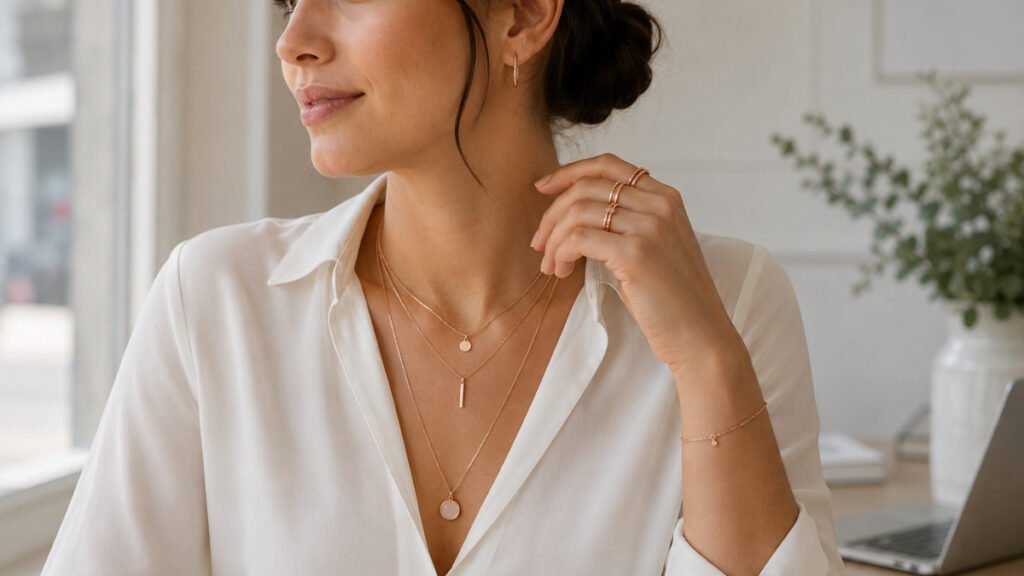
Styling for work
A slim rose gold necklace layered under a blouse, paired with small hoops or studs, adds a quiet touch of polish without feeling like “jewelry” in a distracting way.
Styling for weekends
Ring stacking and a slightly bolder pendant work well for casual outfits — denim and knitwear both pair naturally with rose gold’s warmth.
Styling for special occasions
Save one slightly more statement piece — a fuller necklace or a textured cuff — for date nights or events, layered over your everyday pieces rather than replacing them.
Build a Rose Gold Capsule Jewelry Collection
- One delicate everyday necklace
- One layering pendant
- 2–3 stacking rings
- One pair of everyday studs or small hoops
- One slightly bolder piece for occasions
Many people find that a simple rose gold pendant is enough to visibly warm up a white shirt, a cream sweater, or a plain black dress — proof that a well-chosen single piece often does more work than a full jewelry box.
Can You Mix Rose Gold with Yellow Gold and Silver?
Rose gold looks just as beautiful with yellow gold as it does with silver or white gold, making it easy to create layered, mixed-metal looks that feel stylish without looking overdone.
Rose gold and yellow gold
These two warm tones blend naturally, especially in layered necklaces or stacked rings, since the color difference is subtle rather than jarring.
Rose gold and silver (or white gold)
This combination creates a deliberate, modern contrast. A rose gold necklace with a silver ring, for example, reads as intentional rather than mismatched, especially when the pieces share similar design language (delicate vs. delicate, chunky vs. chunky).
Rose gold and white gold
Similar to silver, white gold provides a cool counterpoint to rose gold’s warmth — a popular combination in engagement and wedding jewelry specifically because of that contrast.
Best Mixed Metal Combinations
| Combination | Best For |
|---|---|
| Rose gold + yellow gold | Subtle, warm layered looks |
| Rose gold + silver | Modern, intentional contrast |
| Rose gold + white gold | Elegant, balanced formal looks |
| All three together | Maximalist, eclectic stacking |
A common misconception is that mixed metals always look mismatched or accidental. In practice, the opposite is often true — a thoughtfully mixed stack tends to read as more curated and personal than an all-matching set.
Is Rose Gold Jewelry Still in Style, or Is It Timeless?
The answer is no. While its popularity grew quickly in the 2010s, its soft, warm color has given it lasting appeal. Today, it’s just as at home in classic jewelry collections as it is in modern, minimalist designs.
Why rose gold never disappeared
Unlike more fleeting trends, rose gold’s popularity is tied to something structural: it genuinely flatters a wide range of skin tones and pairs easily with both classic and modern designs. That kind of practical versatility tends to outlast trend cycles.
Timeless rose gold designs
Simple pendants, thin stacking rings, and classic chain necklaces in rose gold have stayed consistently popular because their designs don’t lean on any particular decade’s aesthetic.
Trends that may fade
More elaborate, heavily embellished rose gold pieces tied to a specific design moment (chunky statement pieces from a particular era, for example) are more likely to feel dated over time than simple, classic silhouettes.
If you’ve heard the concern that rose gold was “just a 2010s thing,” it’s a fair question — but the color’s continued presence across both mainstream and luxury jewelry lines since then suggests it settled into a permanent place in jewelry design rather than fading out.
Does Rose Gold Jewelry Tarnish or Fade?
Solid rose gold keeps its color remarkably well and can last for decades with proper care. Vermeil and plated pieces, on the other hand, are more likely to fade over time because the rose gold layer gradually wears away with everyday use.
What Causes Rose Gold Jewelry to Change Over Time?
| Cause | Effect |
|---|---|
| Copper oxidation (solid gold) | Very gradual tone shift over years |
| Plating wear (plated pieces) | Visible fading, especially at friction points |
| Sweat and skin oils | Speeds up surface wear |
| Air and moisture exposure | Affects plated/vermeil pieces most |
| Daily friction (clothing, rings) | Wears down thin gold layers fastest |
Why plated jewelry ages differently from solid gold
Solid rose gold has color all the way through, so surface wear doesn’t reveal a different metal underneath. Plated rose gold has only a thin surface layer, so as it wears down through daily friction, the base metal underneath can start to show — usually first at high-contact points like the inside of a ring.
How to Care for Rose Gold Jewelry
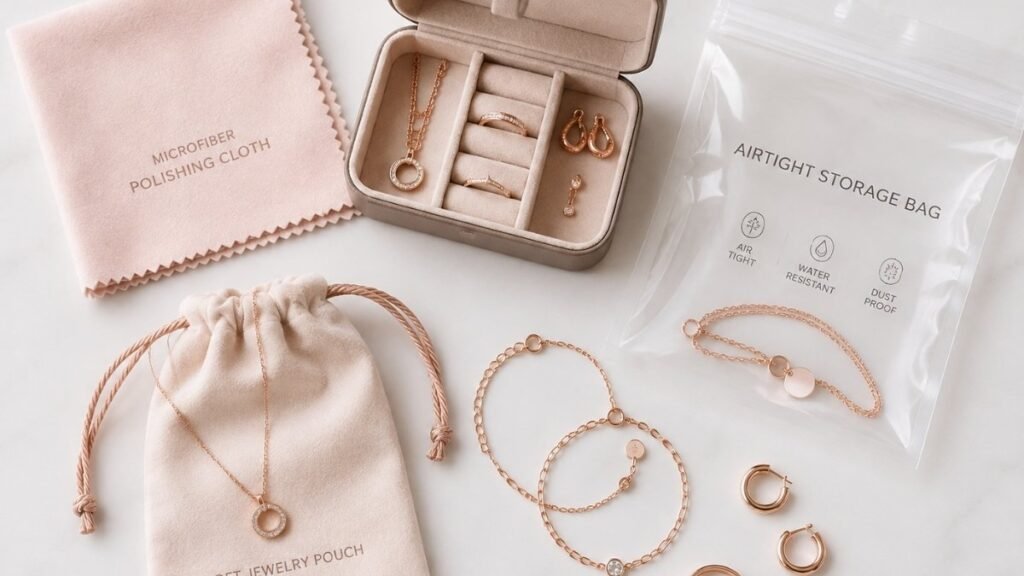
With a few simple habits and proper storage, you can help maintain its color, shine, and finish for years to come, whether you wear it every day or only on special occasions.
Daily care routine
- Apply lotion, perfume, and hairspray before putting jewelry on
- Remove jewelry before showering, swimming, or exercising (“last on, first off”)
- Wipe pieces gently with a microfiber cloth after each wear
- Store in a dry, airtight container rather than an open dish
Storage best practices
Keep pieces separated to avoid scratching, and store them in a sealed pouch or box away from humidity — a bathroom shelf is convenient, but the moisture in the air there can accelerate wear on plated and vermeil pieces especially.
Cleaning mistakes to avoid
Avoid abrasive cleaners, baking soda pastes, or ultrasonic cleaners on vermeil or plated rose gold — these can strip a thin gold layer. A soft, slightly damp microfiber cloth is safe across nearly all rose gold constructions.
Expected lifespan of different materials
Solid rose gold can last a lifetime with basic care. Vermeil pieces typically hold their finish well for one to a few years of regular wear before needing replating. Plated pieces have the shortest expected lifespan and are best treated as more occasional-wear items.
Rose Gold Jewelry Care Checklist
- Apply skincare and fragrance before jewelry, not after
- Remove jewelry before water exposure
- Wipe with a microfiber cloth after wearing
- Store in a sealed, dry container
- Avoid abrasive or ultrasonic cleaning on plated/vermeil pieces
- Consider replating well-loved vermeil pieces occasionally
Choosing Rose Gold Jewelry as a Gift
Its timeless look suits many personal styles, and from delicate necklaces to classic bracelets, there’s something to fit almost any occasion and budget.
Gifts by recipient
For a partner, a delicate pendant necklace or a small gift set often strikes the right emotional note. For a mother, a classic bracelet or simple stud earrings tend to feel timeless rather than trend-driven. For a friend, adjustable rings or simple hoops are safe, universally flattering choices.
Gifts by occasion
Best Rose Gold Jewelry Gifts by Occasion
| Occasion | Suggested Pieces |
|---|---|
| Birthday | Personalized pendant, birthstone piece |
| Anniversary | Matching set, engraved bracelet |
| Valentine’s Day | Heart pendant, delicate ring |
| Mother’s Day | Classic bracelet, simple studs |
Safe jewelry gift choices
When ring size or personal style preference is uncertain, adjustable bracelets and classic pendant necklaces are the safest options — they suit a wide range of tastes and skip sizing guesswork entirely.
Rose Gold Jewelry Buying Checklist
A beautiful product photo doesn’t always tell the whole story. Before making a purchase, take a closer look at the material, gold content, and construction—these details have a much bigger impact on quality and durability than appearance alone.
Green flags
- Clear karat stamp or material disclosure (solid, vermeil, filled, or plated)
- Stated gold thickness for vermeil or plated pieces
- Nickel-free claims backed by specific material details
- Reasonable return and warranty policy
- Real customer photos showing wear over time
Red flags
- Vague descriptions like “rose gold-toned” with no material specified
- No mention of gold thickness or karat
- No return policy
- Pricing that seems high without material justification
Questions to ask before purchasing
- Is this solid gold, vermeil, filled, or plated?
- What karat, if solid or vermeil?
- Is it nickel-free?
- What’s the return and replating policy?
Rose Gold Jewelry Buying Checklist
- Material type is clearly stated
- Karat or gold thickness is specified
- Nickel-free claim is backed by material details
- Return policy exists and is reasonable
- Customer photos are available
- Price aligns with stated materials
FAQ
Is rose gold jewelry dated, or is it still a trendy and timeless choice?
It’s timeless. While rose gold saw a popularity surge in the 2010s, its appeal is rooted in over a century of jewelry-making, and its flattering warmth has kept it a steady staple rather than a passing trend.
How do I match or layer rose gold jewelry with yellow gold and silver/white gold?
Rose gold pairs naturally with both. With yellow gold, keep the contrast subtle for a cohesive warm look. With silver or white gold, lean into the contrast for a modern, intentional mixed-metal style.
What skin tones look best with rose gold jewelry?
Warm, olive, and neutral undertones tend to look especially harmonious with rose gold, though lighter rose gold shades can also flatter cooler undertones. Undertone matters more than overall skin depth.
Why does rose gold jewelry look pinker in some brands and more copper-red in others?
Different brands use slightly different ratios of copper, gold, and silver in their alloy, which shifts the final color. This is a normal formulation difference, not a sign of lower quality.
Does rose gold jewelry tarnish, fade, or change color over time?
Solid rose gold changes very gradually, if at all. Plated and vermeil rose gold can fade with regular wear, especially without proper care, since only a thin gold layer sits over the base metal.
What is the difference between 14K and 18K rose gold in terms of color and durability?
18K rose gold contains more pure gold, giving it a richer color but slightly softer metal, while 14K offers a balanced tone with somewhat better everyday durability. Both are genuine, long-lasting choices at different price points.
Is rose gold jewelry suitable for sensitive skin or nickel allergies?
Higher-karat solid rose gold and nickel-free vermeil or gold-filled pieces are generally safe for sensitive skin. Always check for an explicit nickel-free claim rather than assuming based on color or price alone.
Is rose gold a good option for budget-friendly or demi-fine holiday gifting?
Yes — rose gold vermeil and gold-filled pieces offer a warm, elevated look at an accessible price point, making them a popular and thoughtful choice for holiday and occasion gifting.
Final Thoughts
The best rose gold jewelry isn’t necessarily the most expensive—it’s the piece you’ll reach for again and again because it feels effortless to wear and unmistakably you. Whether it’s a delicate necklace you never take off or a ring that becomes part of your everyday style, the right piece often carries more meaning with time.
Before you buy, look beyond the color and pay attention to the material. Choosing solid gold, vermeil, gold-filled, or plated jewelry with realistic expectations will help you find something you’ll enjoy for years instead of replacing after a season. With a little care。
🏠 Behind This Guide
Shopping for rose gold jewelry can be more confusing than it first appears. Pieces that look almost identical online may differ greatly in quality, durability, and value, making it difficult to know what you’re actually paying for.
That’s why this guide focuses on the decisions that matter most before you buy:
- 💍 Understanding Materials — Learn the difference between solid gold, vermeil, gold-filled, and plated jewelry.
- ✨ Choosing with Confidence — Find styles that suit your skin tone, lifestyle, and everyday wardrobe.
- 🧴 Keeping It Beautiful — Simple care tips to help your favorite pieces stay beautiful for years.
Because buying jewelry shouldn’t feel like guessing.
It should feel like choosing something you’ll love every time you wear it.
💎 Continue Exploring Jewelry Care
Choosing the right rose gold piece is only the beginning. These practical guides will help you understand different jewelry materials, prevent tarnish, and choose pieces that are comfortable enough for everyday wear.
- Does Gold-Plated Jewelry Tarnish? — Learn why plated jewelry changes color, how quickly it may fade, and what affects its lifespan.
- How to Keep Jewelry From Tarnishing — Use simple cleaning, storage, and daily-wear habits to help your favorite pieces stay brighter for longer.
- Hypoallergenic Jewelry for Sensitive Skin — Discover which metals are less likely to cause irritation and what to check before buying.
- Complete Jewelry Metals Guide — Compare gold, silver, platinum, stainless steel, titanium, and other common jewelry metals in one practical guide.
❤️ A Final Note
Jewelry is more than an accessory—it’s a simple way to express your style, celebrate special moments, and make everyday outfits feel a little more complete.
At Aceloduo, we’re here to make jewelry easier to understand and more enjoyable to wear. From explaining materials and care tips to sharing styling inspiration, gift ideas, and affordable jewelry recommendations, our goal is to help you shop with confidence and choose pieces you’ll truly enjoy.
Our goal is simple: helping you discover beautiful, affordable jewelry for everyday wear, meaningful gifts, and moments worth celebrating.